
Age
Layered Patches at Vent Bases
- You See
- Mounds of mastic and tape around old vents.
- What It Means
- Patch layers trap water and hide rust. They come off so the base can be rebuilt with flashing the coating bonds to.
New Castle metal roof coating on shop roofs begins at the details: we strip and rebuild old vent bases, then clean and coat the panels.
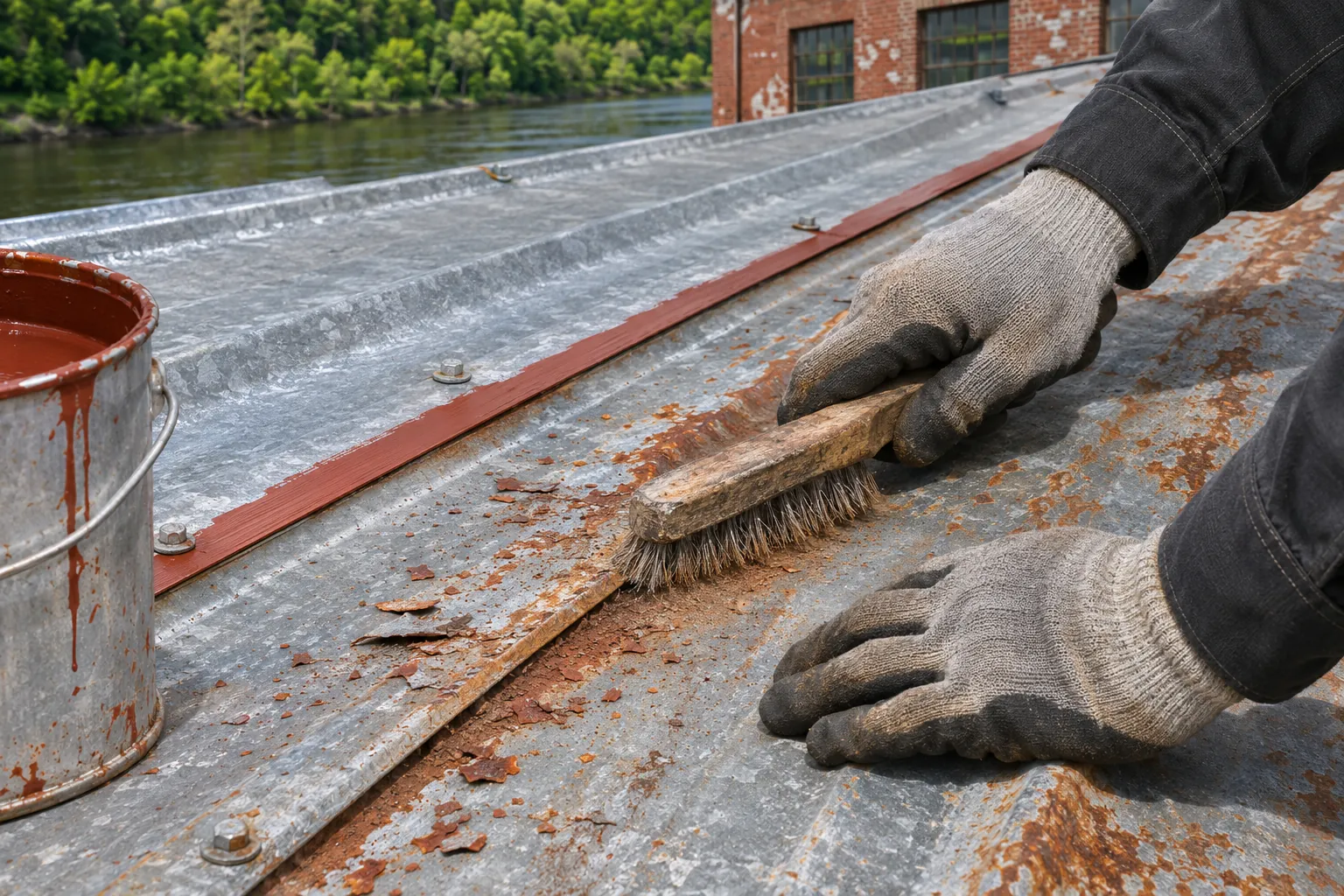
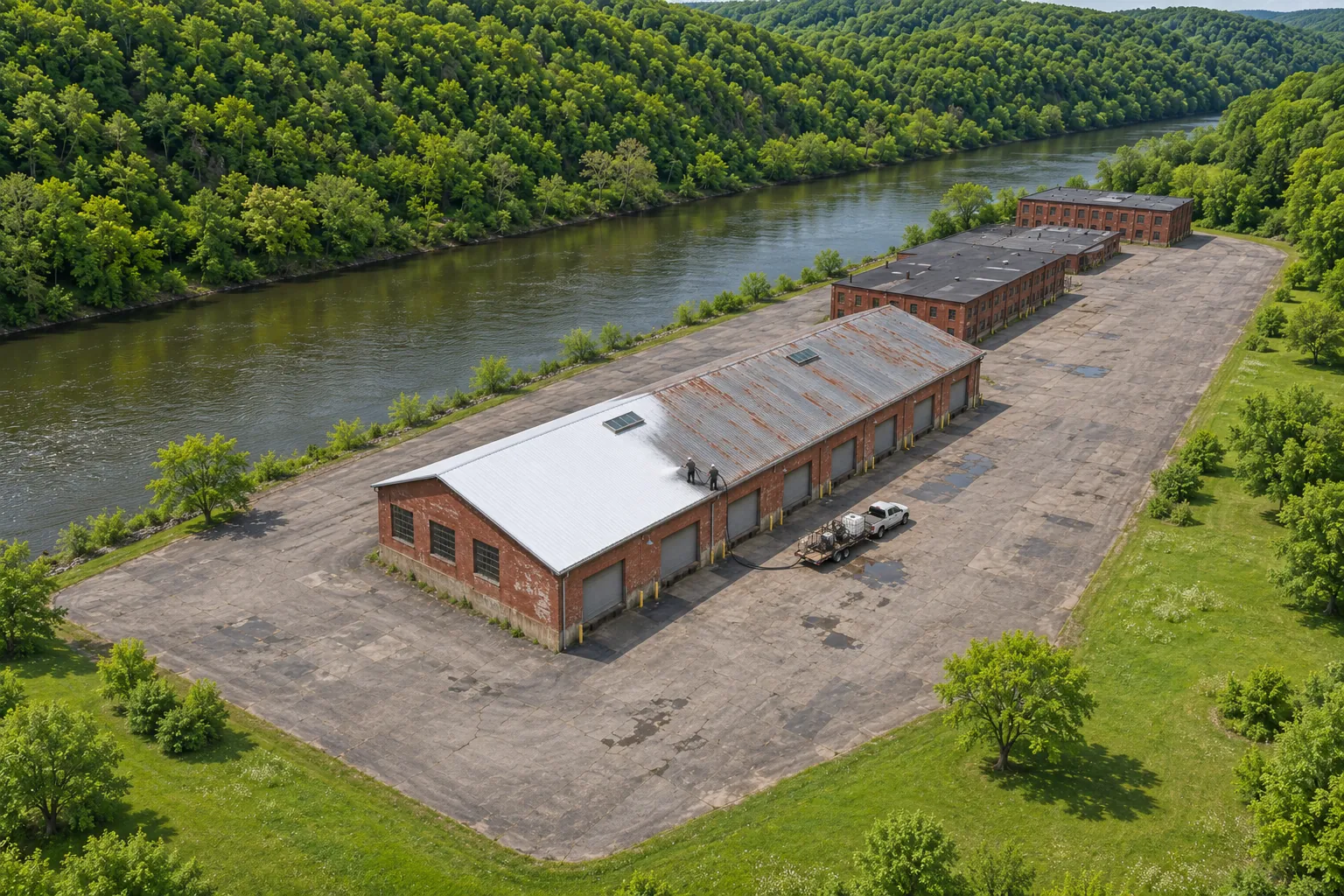
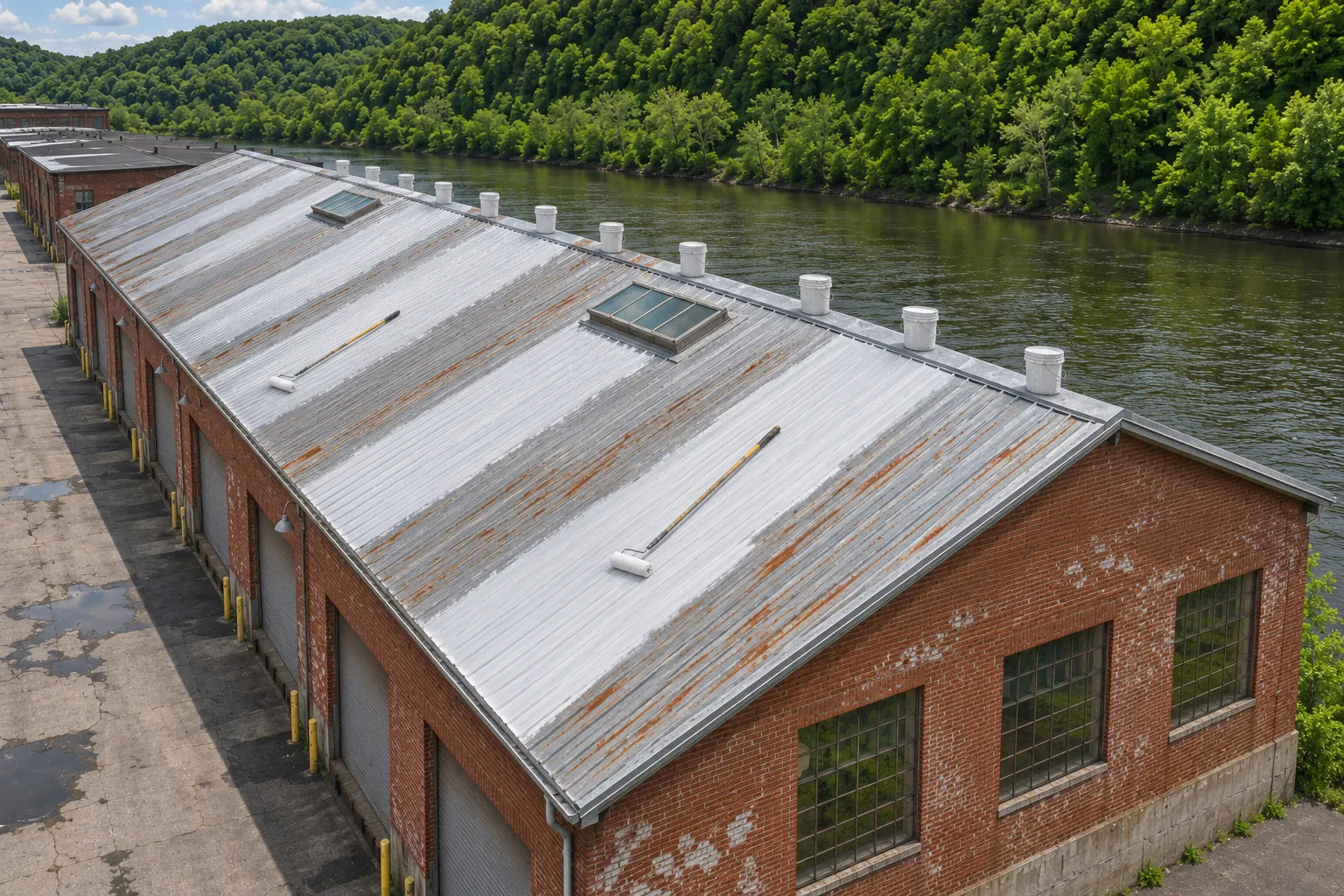
New Castle metal roof coating on fabrication shops usually starts at the vents. Old vent bases carry layers of mastic, tape, and rusted flashing from years of patching.
We strip those layers, check the metal underneath, and rebuild each base before coating, since an open base stays the main leak source after the field is done. Exhaust fans and welding vents get the same treatment, with primer and a coating rated for heat around each one.
Fabrication and industrial roofs here wear in ways tied to the work going on inside.
Common failures on New Castle shop roofs, and what the coating work does about each.
Patched bases keep leaking because water gets under the old layers.
Bases are rebuilt with new flashing, and the coating ties them into the field.
Machinery and fans shake fasteners loose over time.
Screws are tightened or upsized, then sealed under the coating.
Exhaust residue speeds up corrosion around fans.
Corroded areas are cleaned and primed before a coating rated for the exposure goes on.
Long shop roofs move with each heat cycle, opening laps.
Laps and ridge caps get sealant and fabric that move with the panels.
Shop roofs in New Castle usually take one of these four approaches.
| Option | Where It Fits | What To Know |
|---|---|---|
| Acrylic over primed metal | Sloped shop roofs | Scheduled for dry, mild weeks |
| Urethane base near exhaust | Areas around welding fans | Tougher layer where heat and fumes hit |
| Silicone on low-slope bays | Flat or low additions | Recoats stay silicone |
| Detail repair before a full coat | Roofs where vents leak first | Fixes the main leak sources now |
| Capping unused vents | Shops with abandoned penetrations | Removes openings that no longer serve a purpose |
Another layer of mastic rarely stops a vent leak for long. Get a ballpark range for rebuilding the bases and coating the roof.
On shop roofs, the vents, fans, and curbs come first and the field coat comes last.
We look at each vent base, fan, and curb, test old repair materials, and check how far rust runs into the panels.
Mastic, tape, and loose flashing come off down to metal so we can see what is underneath.
Each base gets new flashing and sealant, and any rusted-through metal around it is replaced.
Panels are washed, exhaust residue is removed, and primer goes on bare or rusted steel.
The field is coated once every opening is closed, so the details stay sealed under one surface.
Most of our other roof work sits closer to Pittsburgh, in the towns below. For a building in between, call us or send us a message.
River terminals, fabrication shops, and hillside blocks with metal roofs.
Storefront and office roofs beside busy sidewalks.
Church, school, and office roofs checked from below.
Commercial roofs with worn rooftop service paths.
Warehouse roofs crossed by cable runs and supports.
Rusted-through metal, flashing we cannot reach, or old repair materials the coating will not bond to can all stop the work around vent bases. We inspect those connections and decide what gets rebuilt before surface work. The field is never finished around open bases, since they would stay the main leak sources.
Call with the shop address and roof size. New Castle is inside our area, and we can set up a roof walk to look at the vents, fans, and panels before pricing anything.
We are a metal roof coating contractor near New Castle that works on fabrication shops and plants, with the vent and exhaust details those roofs need. The same inspection-first process applies as on our Pittsburgh jobs.
Shop roofs fall in the usual coating range of about $2.50 to $4.00 per square foot, with replacement about $5 to $8. The number of vent bases to rebuild, the exhaust areas that need extra prep, and access around equipment move the price within that range.
Yes. The area around each fan is cleaned of residue, primed, and given a coating rated for heat and fumes. The fan curb is reflashed first, and walk pads go along the service line to it.
Most bases are rebuilt: the old patching comes off, the metal is checked, and new flashing and sealant go on. Bases with rust holes or bent collars are replaced outright, and unused vents are capped and sealed instead of patched again.
Production usually continues. Exhaust fans and makeup air units are shut down in short, planned windows while the work near them is done, and the rest of the roof is coated around normal shifts.
Get a ballpark range for your shop roof, or call to have the vent bases and exhaust areas looked at.