
Ponding
Silicone Coating Over Ponding Water
- You See
- Rings of dirt where water stood for days.
- What It Means
- Silicone tolerates lingering water better than acrylic, yet a sunken panel or blocked drain still gets fixed so water leaves the roof.
Pittsburgh silicone roof coating starts with finding why water collects. We fix the drains and low spots first, then spread silicone across the field.
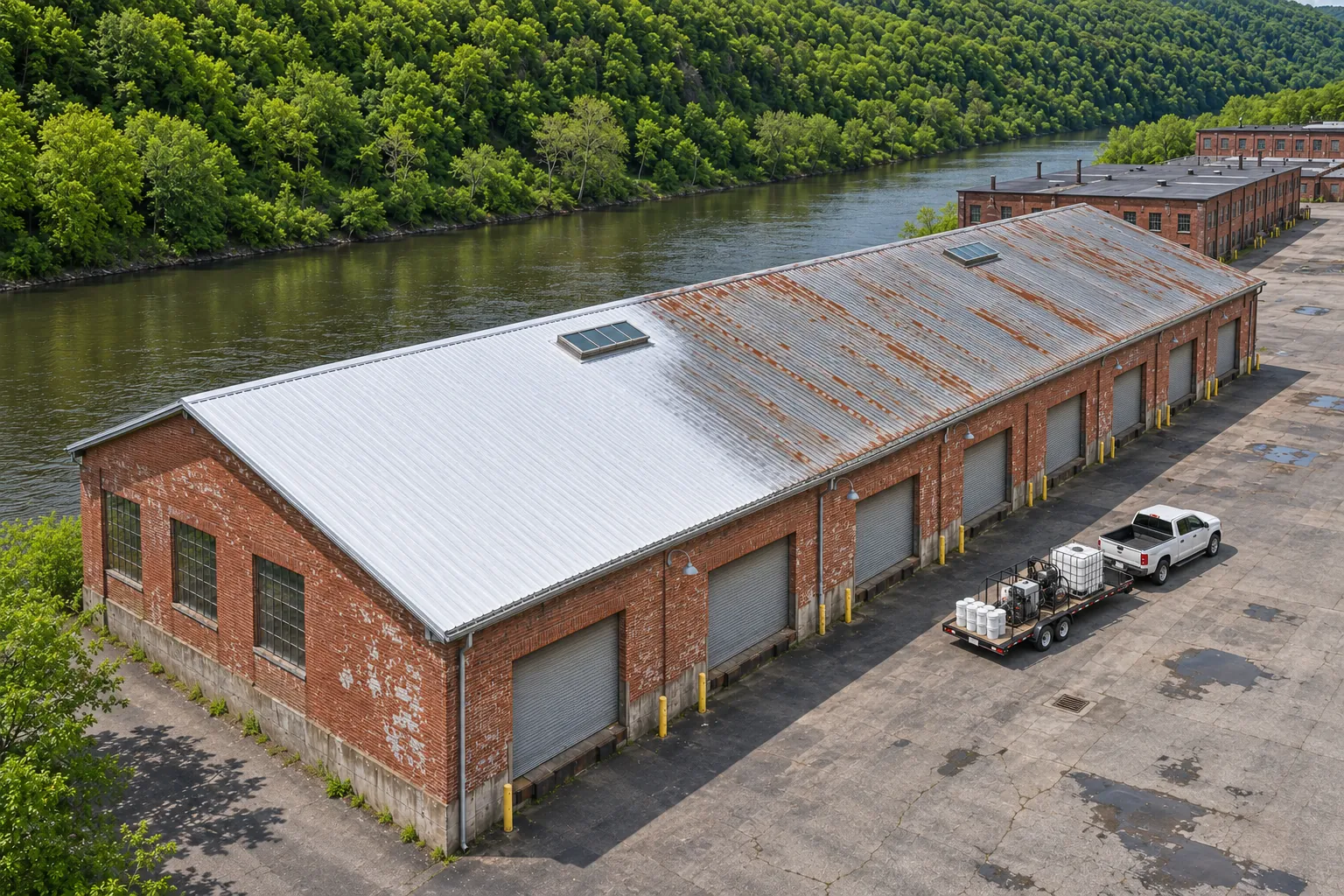
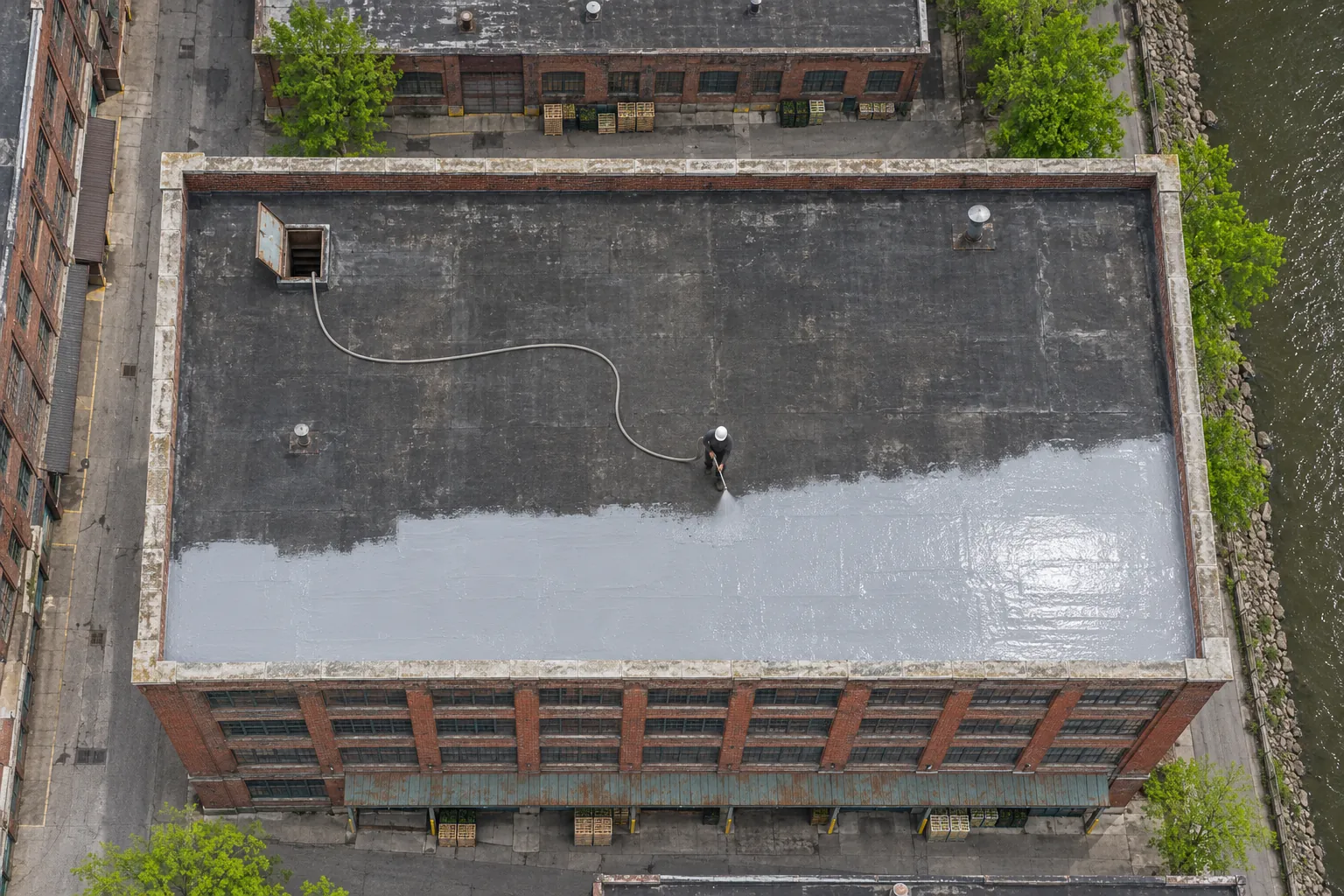
Pittsburgh silicone roof coating fits low-slope roofs that hold a little water after rain. These lists show where it works and where other work comes first.
Silicone covers a lot, and these four conditions decide whether it goes on and how.
Silicone work takes a few forms, set by what is already on the roof.
| Option | Where It Fits | What To Know |
|---|---|---|
| Silicone over primed metal | Low-slope metal panels | Primer goes on wherever rust shows |
| Silicone over an old acrylic coat | Acrylic roofs ready for a change | Adhesion is tested first |
| Silicone over a cleaned membrane | Older flat roofs on mills and plants | Seams and blisters repaired before coating |
| High-solids single pass | Roofs that need a thick coat quickly | Fewer passes, same measured thickness |
What fails on low-slope roofs here, and what silicone work does about each one.
Slow drainage keeps water against seams and fasteners for days after a storm.
Silicone holds up under lingering water once drains and low spots have been corrected.
Dark membranes and faded metal run hot through July and August.
A white silicone surface reflects much of that sunlight and keeps the roof cooler.
Older flat roofs split at seams after years of freeze-thaw movement.
Seams are reinforced with fabric, and the silicone film bridges them as one continuous layer.
Low-slope metal leaks first at fasteners that sit in slow water.
Each screw is sealed and then covered by the silicone so standing water stays off the hole.
Water standing for days after rain wears out seams and fasteners. Get a ballpark range for silicone coating once the low spots are fixed.
The order we follow on every silicone job, from first look to final pass.
We map where water stands, check drains, scuppers, and curbs, and take moisture readings so wet insulation never ends up under the silicone.
Blocked drains are cleared, failed scuppers rebuilt, and crickets added behind curbs so water leaves the roof.
Power washing removes dirt and chalk, and primer goes on over rusted metal or any surface where adhesion tests call for it.
Seams, penetrations, and curb corners get fabric set in silicone before the field coat starts.
Silicone goes on in one or two passes at the specified thickness, on a dry surface warm enough to accept it.
Some buildings mix a flat silicone section with sloped metal or shingles.
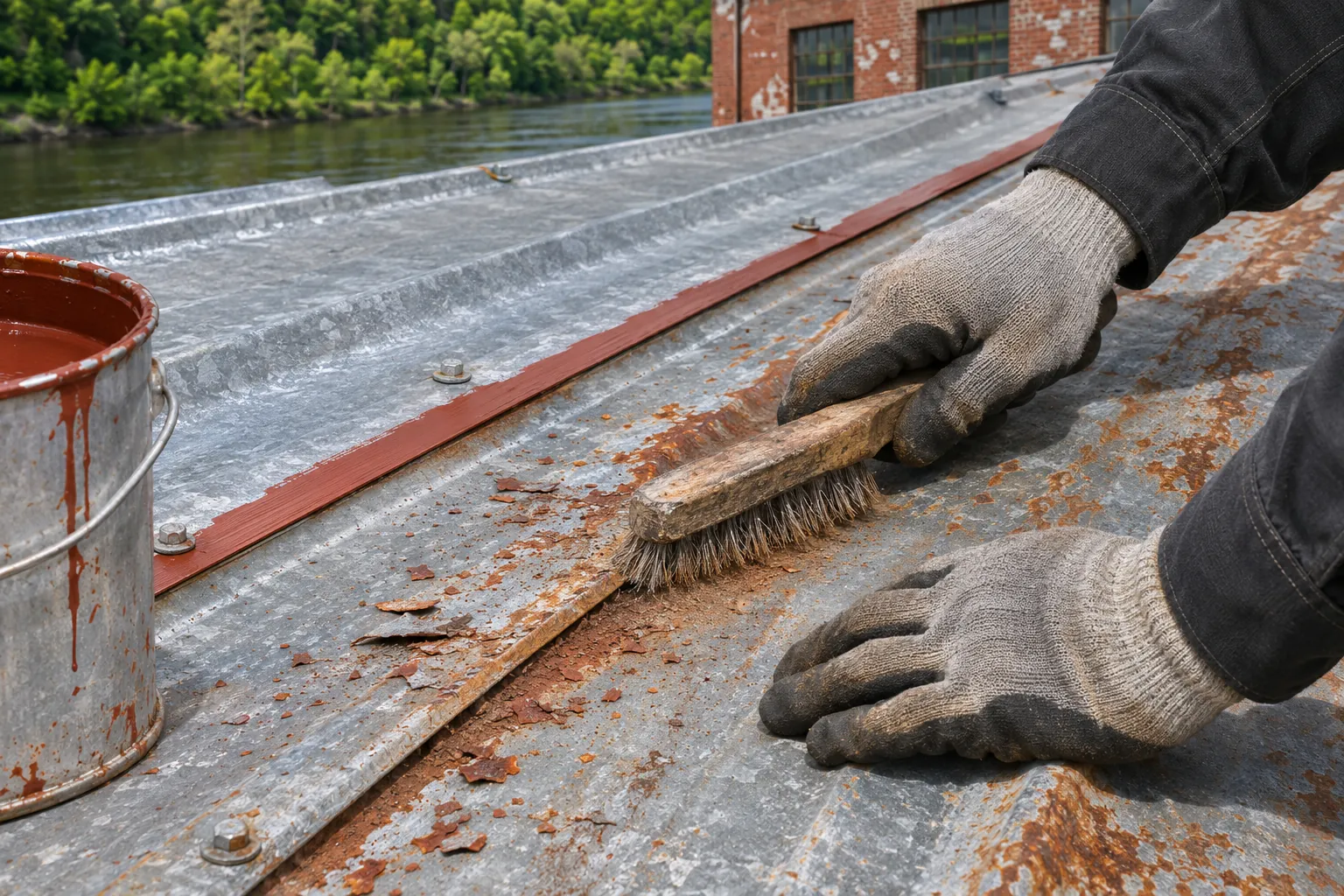
Rust treatment, fastener sealing, and two coats for metal panels.
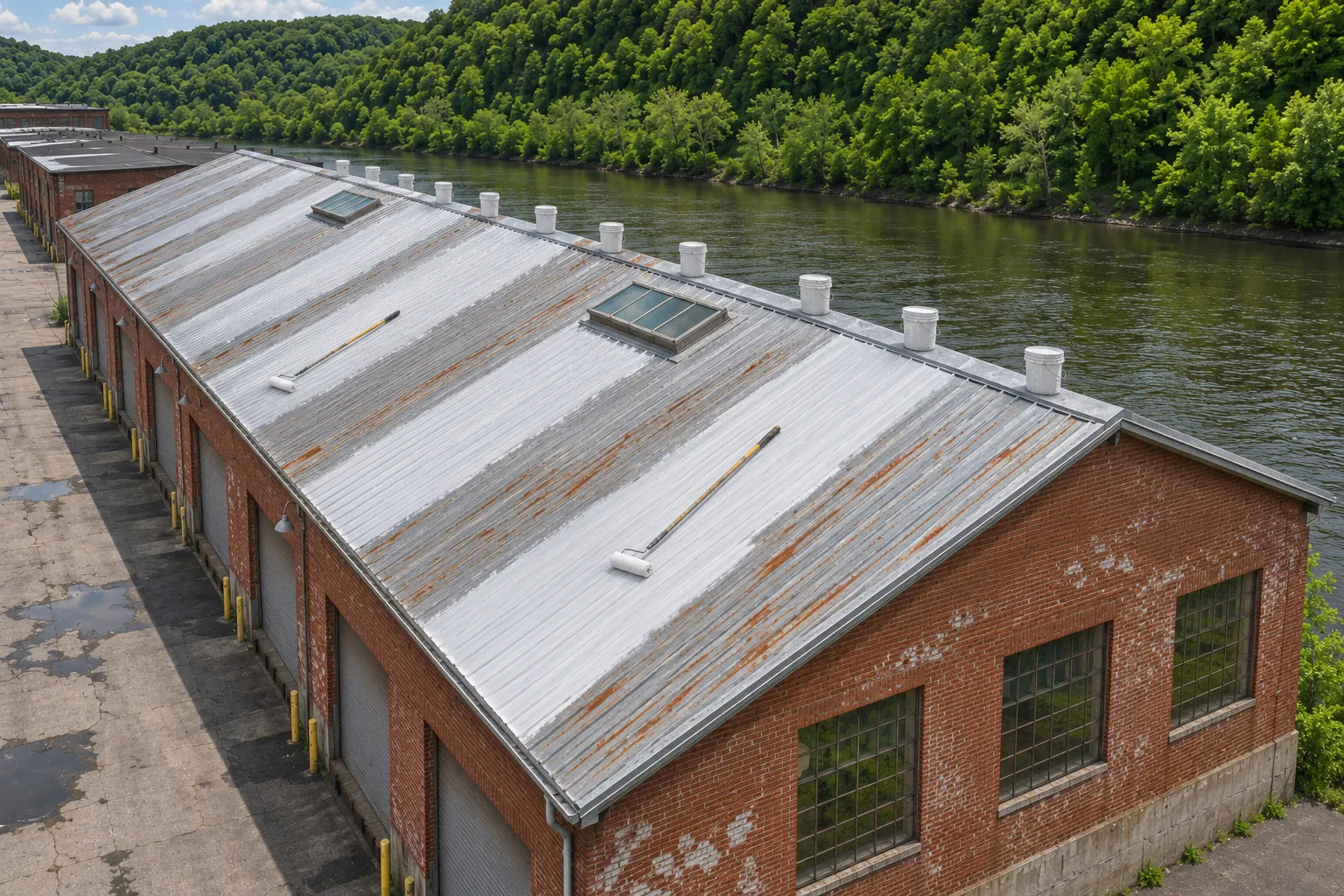
Water-based coating for sloped panels in dry weather.
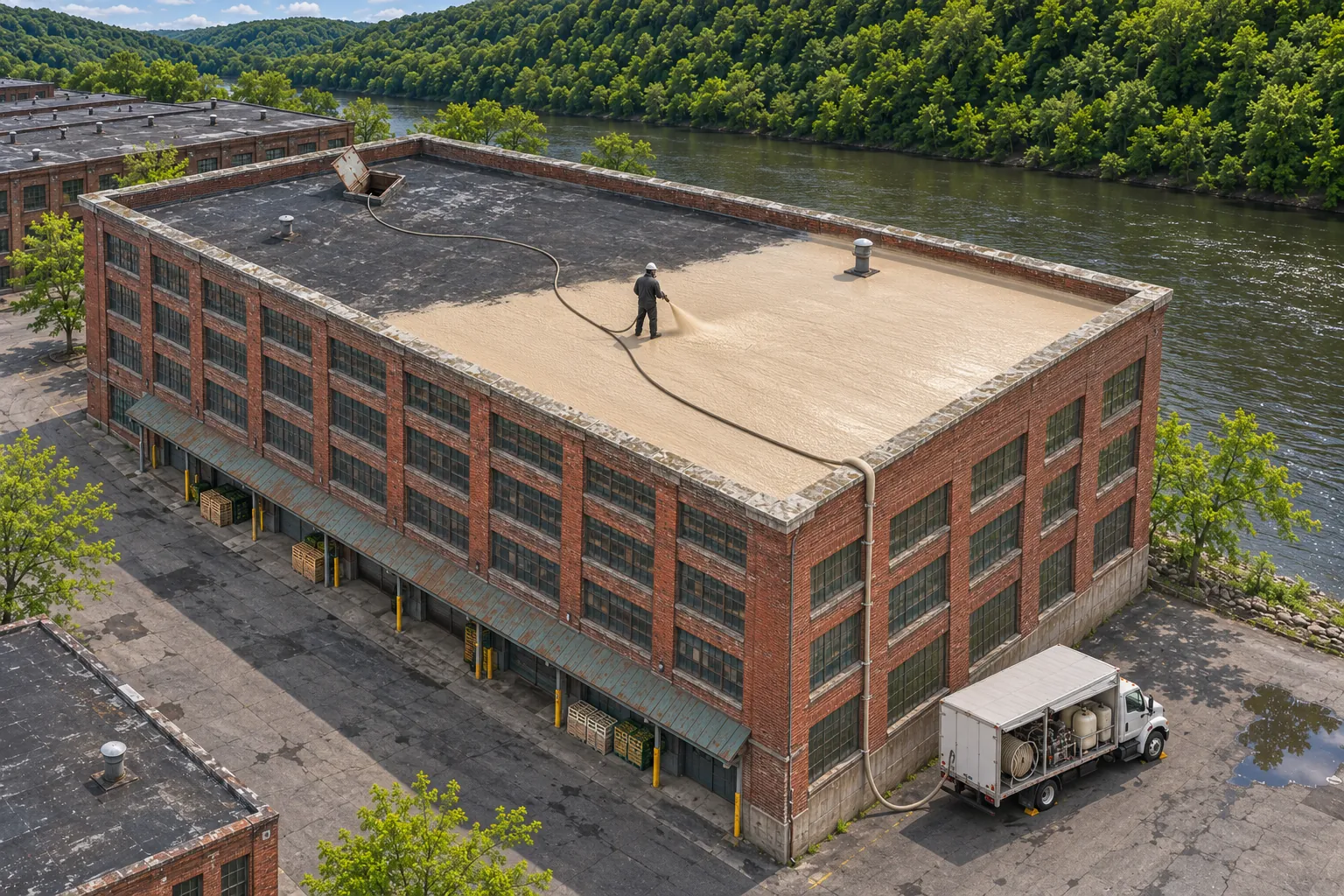
Sprayed insulation and one continuous surface for flat roofs.
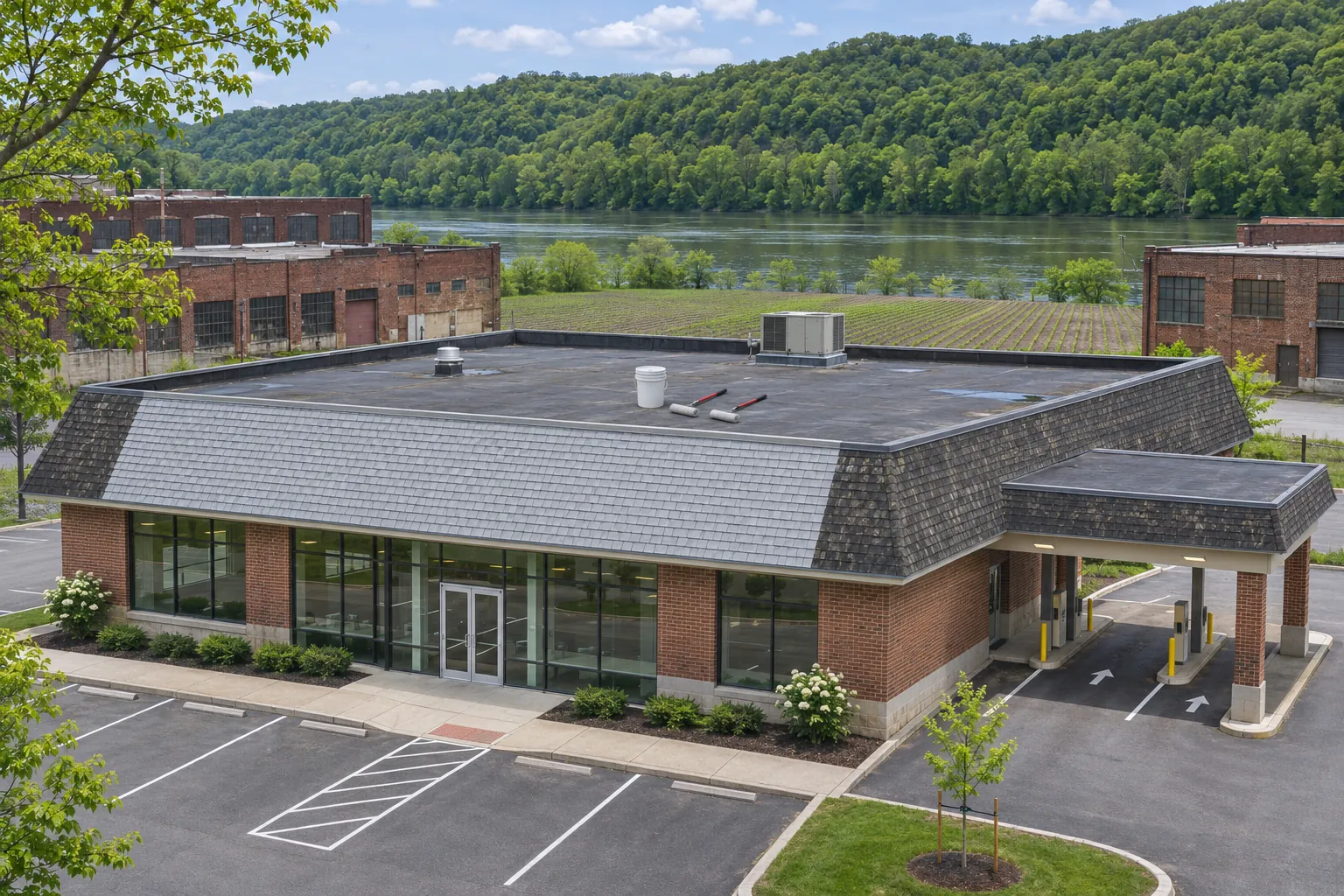
Approved coatings for serviceable commercial shingle sections.
Silicone handles water near a curb or in a shallow low spot when the roof is solid and the product is rated for it. We first find out why the water collects.
A sunken panel or blocked drain still gets fixed, and the curb flashing still needs a properly prepared joint to the roof around it.
Yes. The panel surface has to meet the product limits for temperature and dryness, and metal in shade can stay colder than the air for hours. We check moisture and temperature where the coating goes and watch the forecast through the cure, so the call never rests on air temperature alone.
Expect silicone to fall within the coating range of about $2.50 to $4.00 per square foot of roof, with replacement at about $5 to $8. Two sections of one warehouse can land at different points, because preparation, detailing, silicone thickness, coat count, and the penetrations and flashing differ from one section to the next.
Plan on silicone for every later recoat. Most other coatings bond poorly to cured silicone, so the next coat is silicone over a cleaned surface. That is worth knowing before you choose, especially if the building has other roofs coated in acrylic.
Dust and pollen stick to silicone, especially near rail lines and busy roads. A gentle wash brings back most of the brightness. The dirt has no effect on how well the coating keeps water out, though it lowers how much sunlight the roof reflects.
Wet silicone is slick, so service visits are planned for dry conditions and walk pads go along regular paths to rooftop units. Granules broadcast into the topcoat along those paths add grip where crews walk most.
Get a ballpark range for silicone coating, or call to have the low spots and drains looked at first.