
Wind
Disadvantages of a Spray Foam Roof
- You See
- Overspray risk on cars, windows, and neighbors.
- What It Means
- Foam drifts in wind, so spray days hinge on calm weather, masking, and a plan for loading docks and parked vehicles.
Pittsburgh spray foam roofing starts on the ground: we stage the rig and mask nearby intakes, then spray foam over a dry, repaired deck.
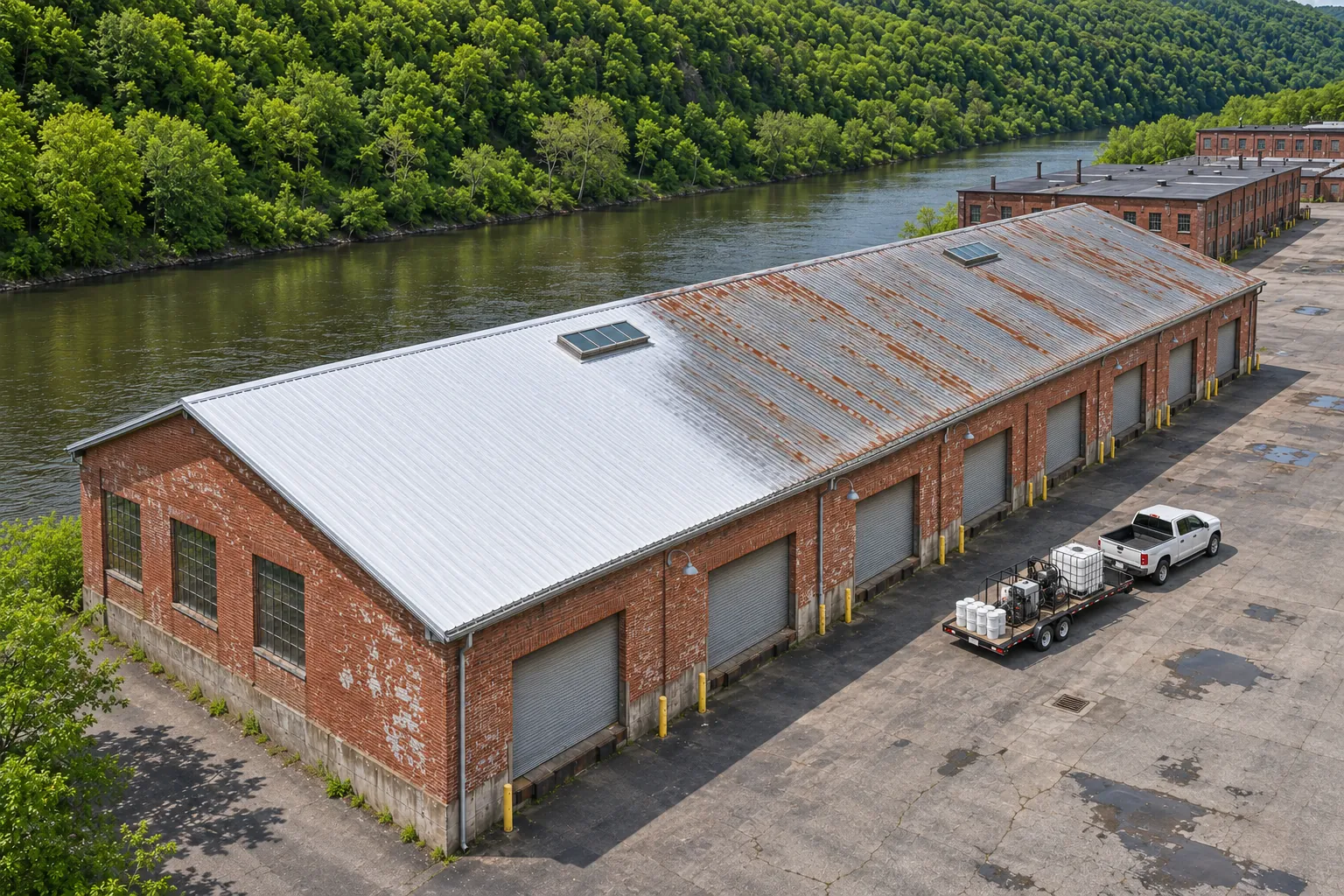
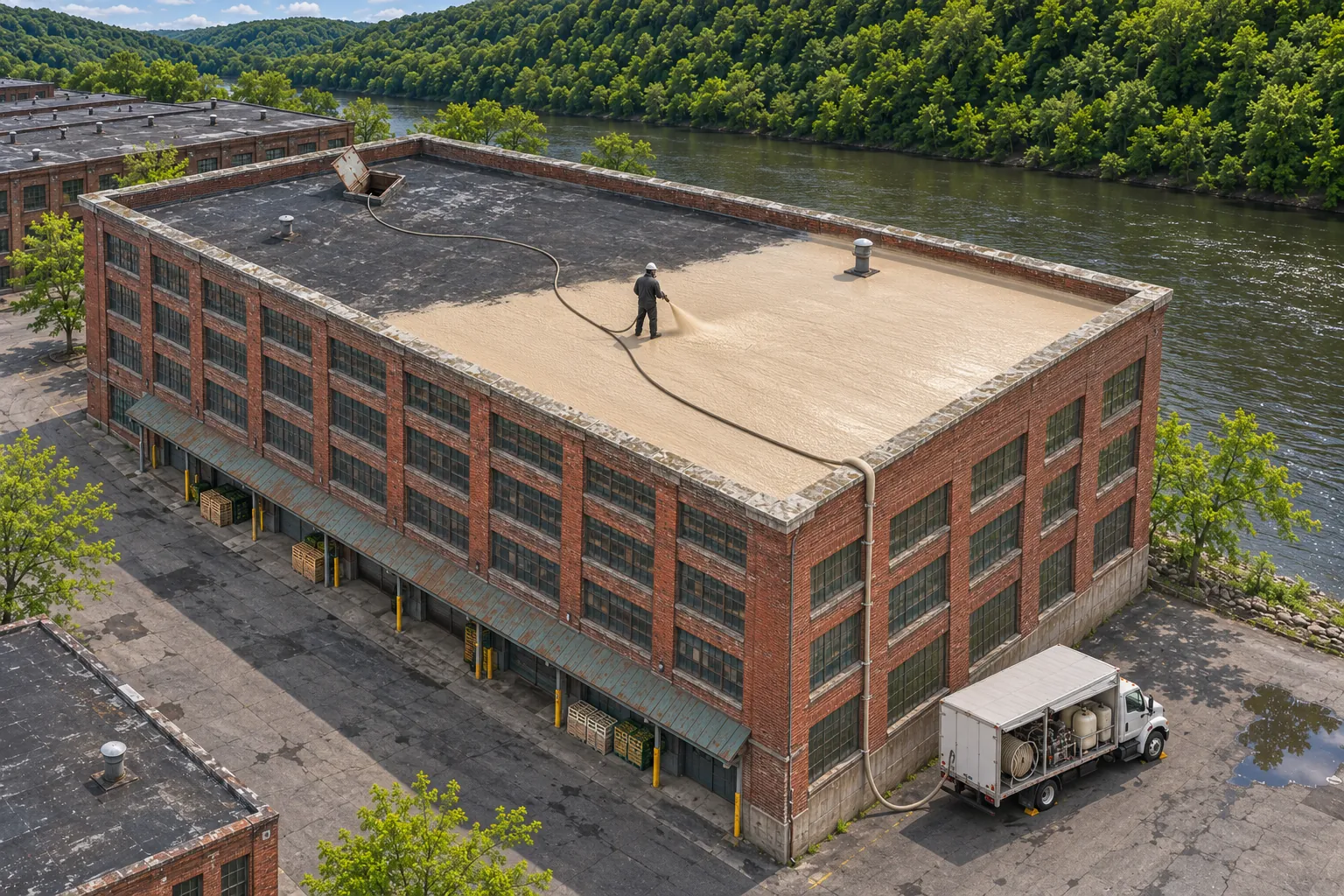
Pittsburgh spray foam roofing works on flat and low-slope roofs where the deck is dry and the assembly can take added foam. Here is how we sort them.
Foam is sprayed in place, so the building and its surroundings matter as much as the roof itself.
Foam jobs vary by what sits under the foam and how much insulation the building needs.
| Option | Where It Fits | What To Know |
|---|---|---|
| Foam over metal panels | Attached, dry metal roofs | Panels are cleaned and fastened first |
| Foam over an old membrane | Flat roofs with dry insulation | Wet sections are cut out and replaced |
| Tapered foam | Flat roofs that pond | Extra depth adds slope toward the drains |
| Topcoat renewal only | Foam roofs whose foam is still firm | Worn coating is cleaned and recoated |
Common failures on flat commercial roofs, paired with what foam work does about each one.
Pipes, conduits, and curbs each carry their own flashing that can fail.
Foam sprays around every penetration and forms one continuous surface with no lapped joints.
Older flat roofs lose heat through thin or crushed insulation.
Each inch of foam adds insulation, set to the thickness the building needs.
Flat sections hold water that never reaches the drains.
Foam can be built thicker in places to add slope toward the drains.
Seams on aging membranes open with each freeze-thaw cycle.
Foam bonds over the old surface once it is dry and firm, covering the seams completely.
Roofs crowded with penetrations leak at each flashing. Get a ballpark range for foam and a topcoat over the whole surface.
The sequence we follow on every foam roof, from moisture checks to topcoat.
We take moisture readings and core samples, check the deck and attachment, and note every intake, window, and parking area near the roof.
Rooftop intakes are shut down with your staff, nearby surfaces are masked, and spraying is set for calm days.
Wet insulation is removed and replaced, loose material is fastened, and the surface is cleaned so the foam bonds.
Foam goes on in lifts to the planned thickness, with extra depth where the roof needs slope toward drains.
A protective coating goes over the foam soon after spraying, at the thickness that keeps sunlight off the foam.
Some buildings have sloped metal or shingle sections beside the foam roof.
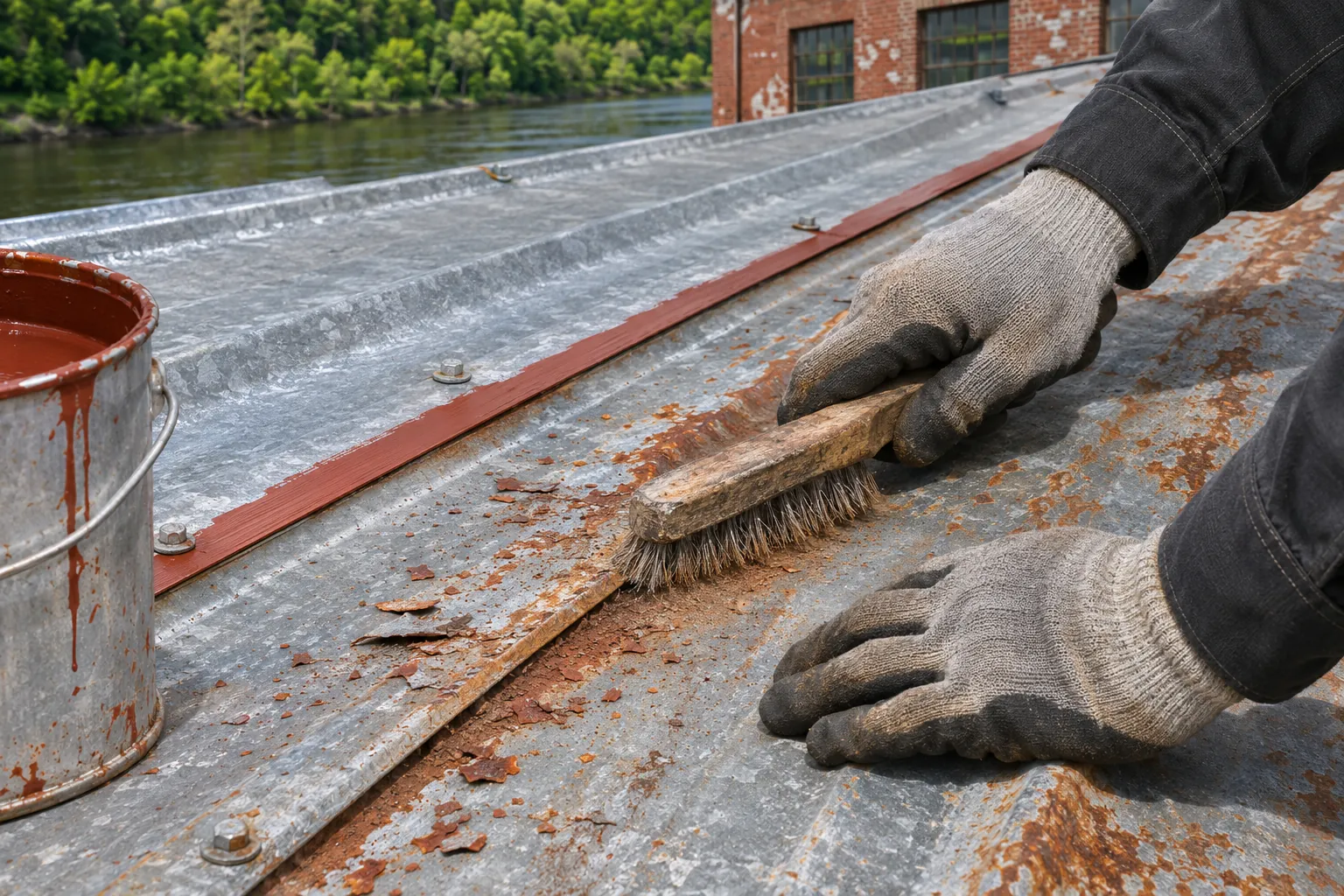
Rust treatment, fastener sealing, and two coats for metal panels.
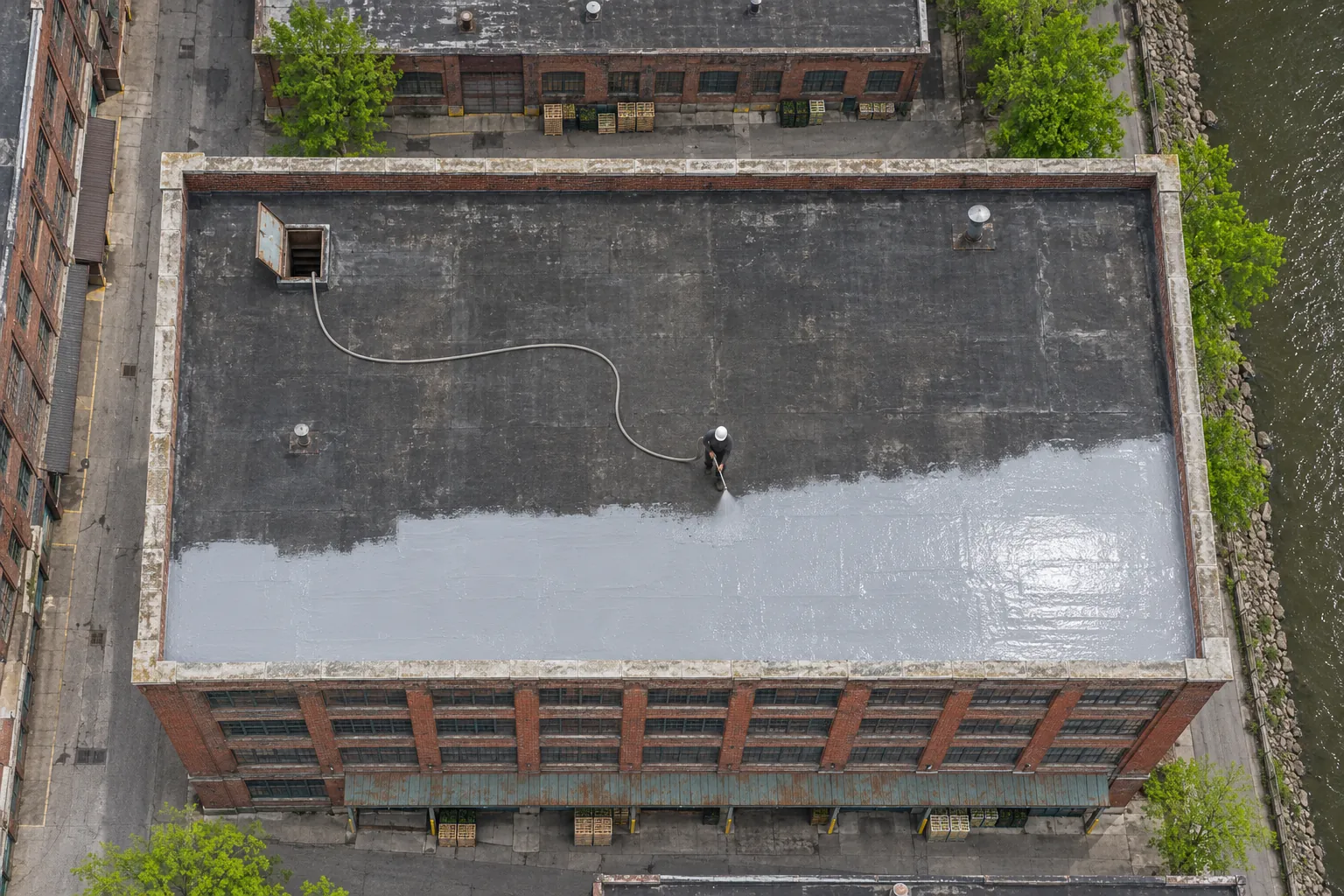
Moisture-tolerant coating for low-slope and flat roofs.
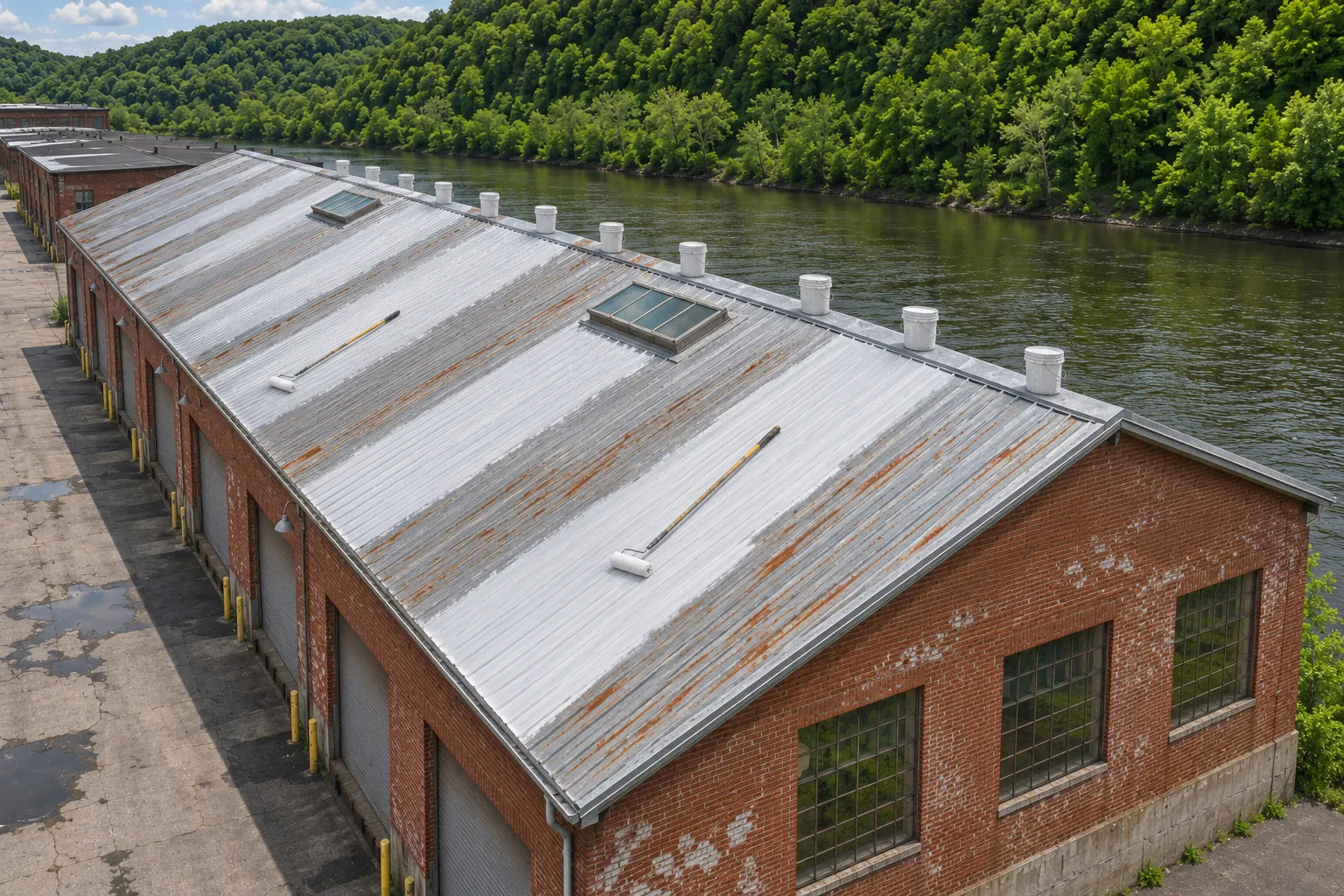
Water-based coating for sloped panels in dry weather.
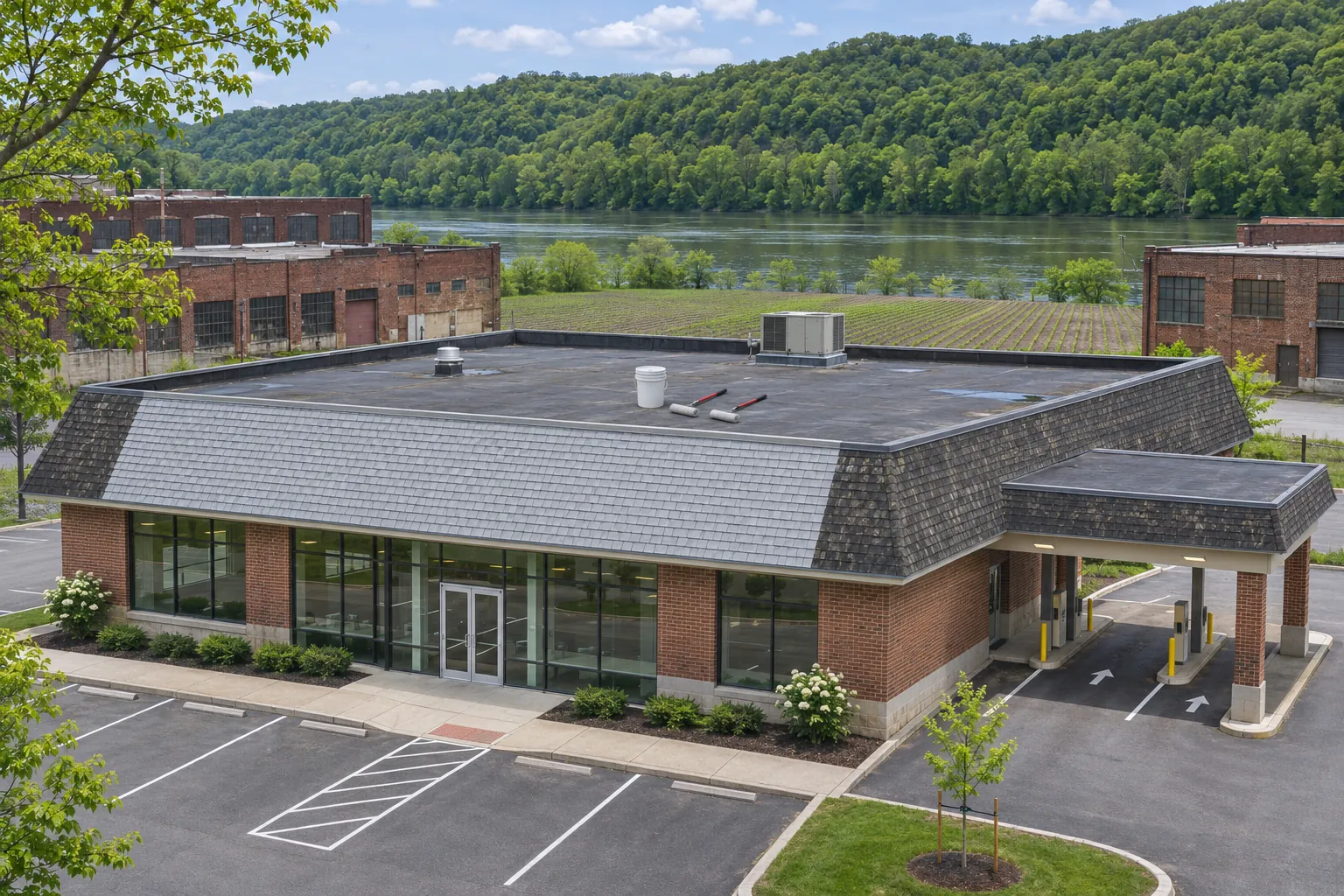
Approved coatings for serviceable commercial shingle sections.
Spraying over a busy terminal means controlling overspray, timing the work for the weather, and keeping up the protective topcoat for years after. We look at loading activity, nearby equipment, and air intakes before suggesting foam. The finished surface still needs repairs, safe access, and regular checks of worn or damaged spots.
Foam over attached metal panels adds insulation, but winter problems at a fabrication shop often involve more than that. We inspect attachment, wet areas, and interior conditions first. Condensation in winter can come from air leaks, which more insulation alone leaves in place.
Pricing for foam depends on substrate repairs and foam depth, plus the protective topcoat. Our coating range of about $2.50 to $4.00 per square foot, and about $5 to $8 for replacement, is a comparison point rather than a full foam quote. We price foam after measuring the roof, checking moisture, and setting the thickness.
Thickness comes from two things: the insulation the building needs and any slope added toward drains. A flat roof usually gets an even layer with extra depth where water collects. We mark the plan before spraying and check depth as each section is finished.
Walk the roof each spring and fall, look for punctures, bird pecks, and worn topcoat, and patch small spots before water reaches the foam. The topcoat gets renewed when it wears thin, which keeps the foam itself in service.
Clean, attached metal panels take foam well, and it buries the fasteners and laps under one surface. The panels are fastened tight and cleaned of rust scale first, and wet insulation under them is replaced. Gutters and edge metal get new terminations so water leaves the foam cleanly.
Get a ballpark range, or call to have the deck moisture and nearby intakes checked before foam is planned.