Coating Systems

Metal Roof Coating Services in Pittsburgh

Five Coating Systems Matched to the Roof You Have

Our metal roof coating services in Pittsburgh start the same way: we inspect the roof, then match the system to its panels, slope, and drainage.

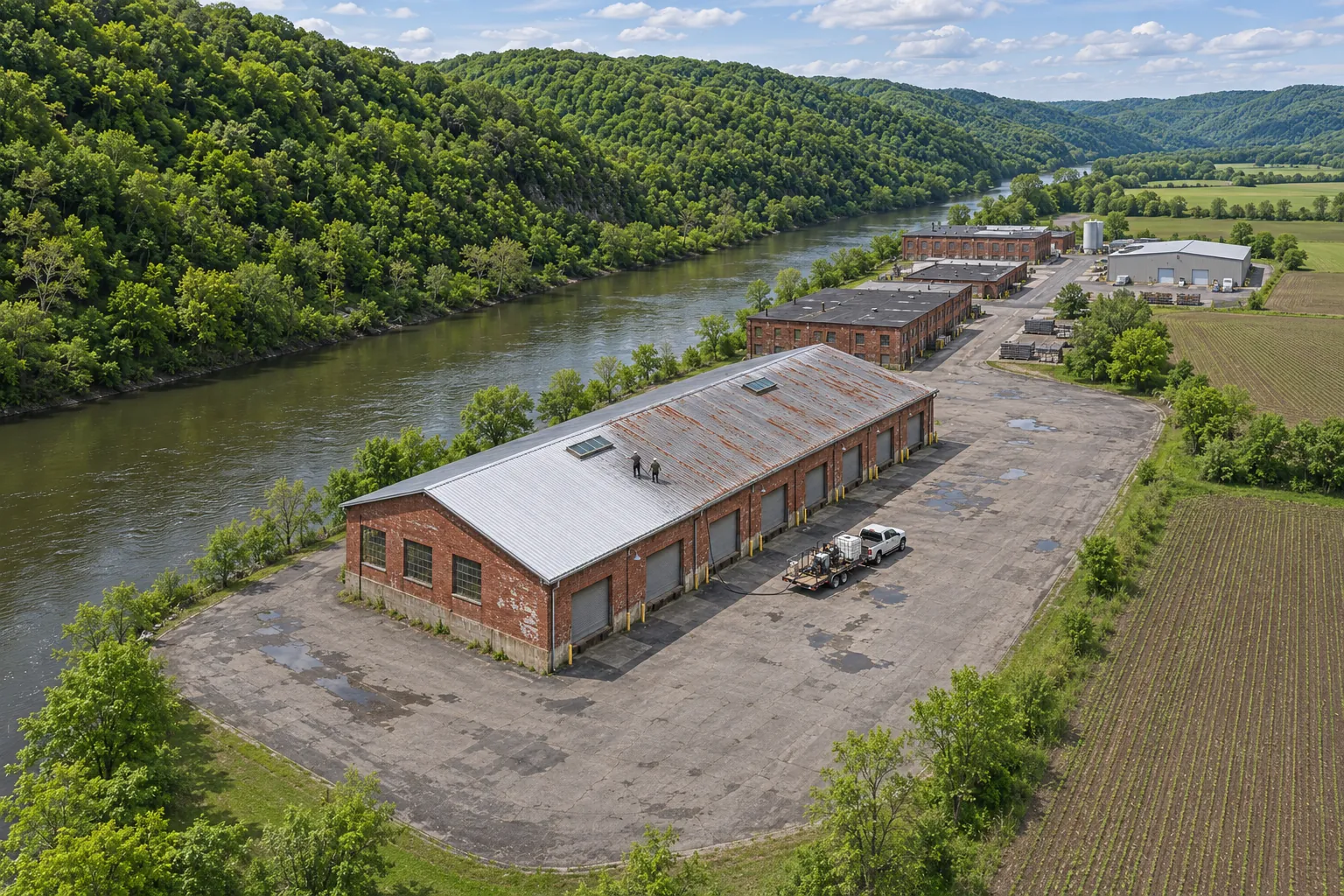
Wide drone view of a riverside brick warehouse with a half-coated metal roof between wooded hills and fields
1Inspect The Roof
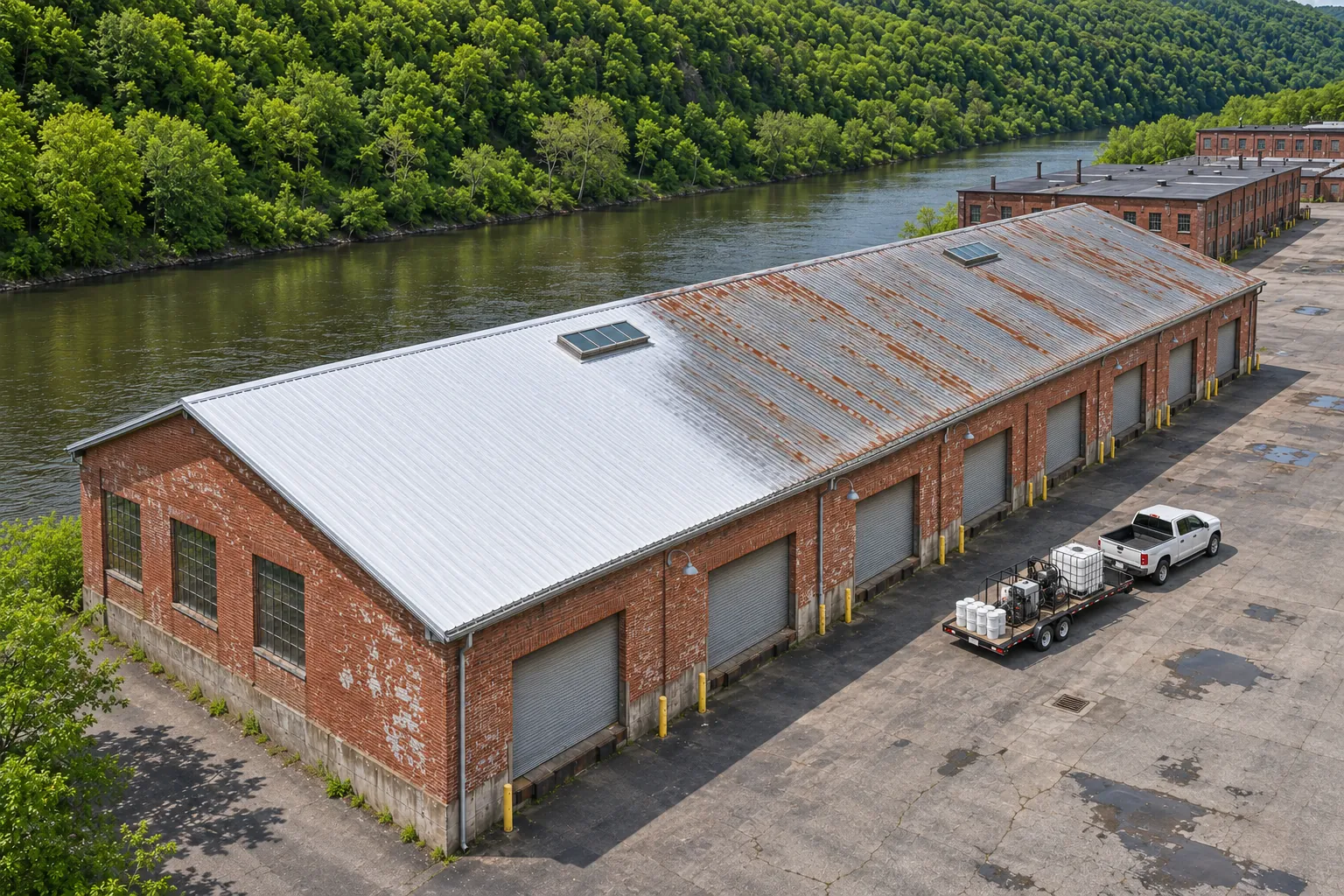
Pickup and trailer loaded with coating pails beside a brick warehouse with a freshly coated metal roof
2Stage The Coating

Comparing Our Metal Roof Coating Services in Pittsburgh

Each of our metal roof coating services in Pittsburgh fits a different roof. The cards show where each one works best and what we check first.

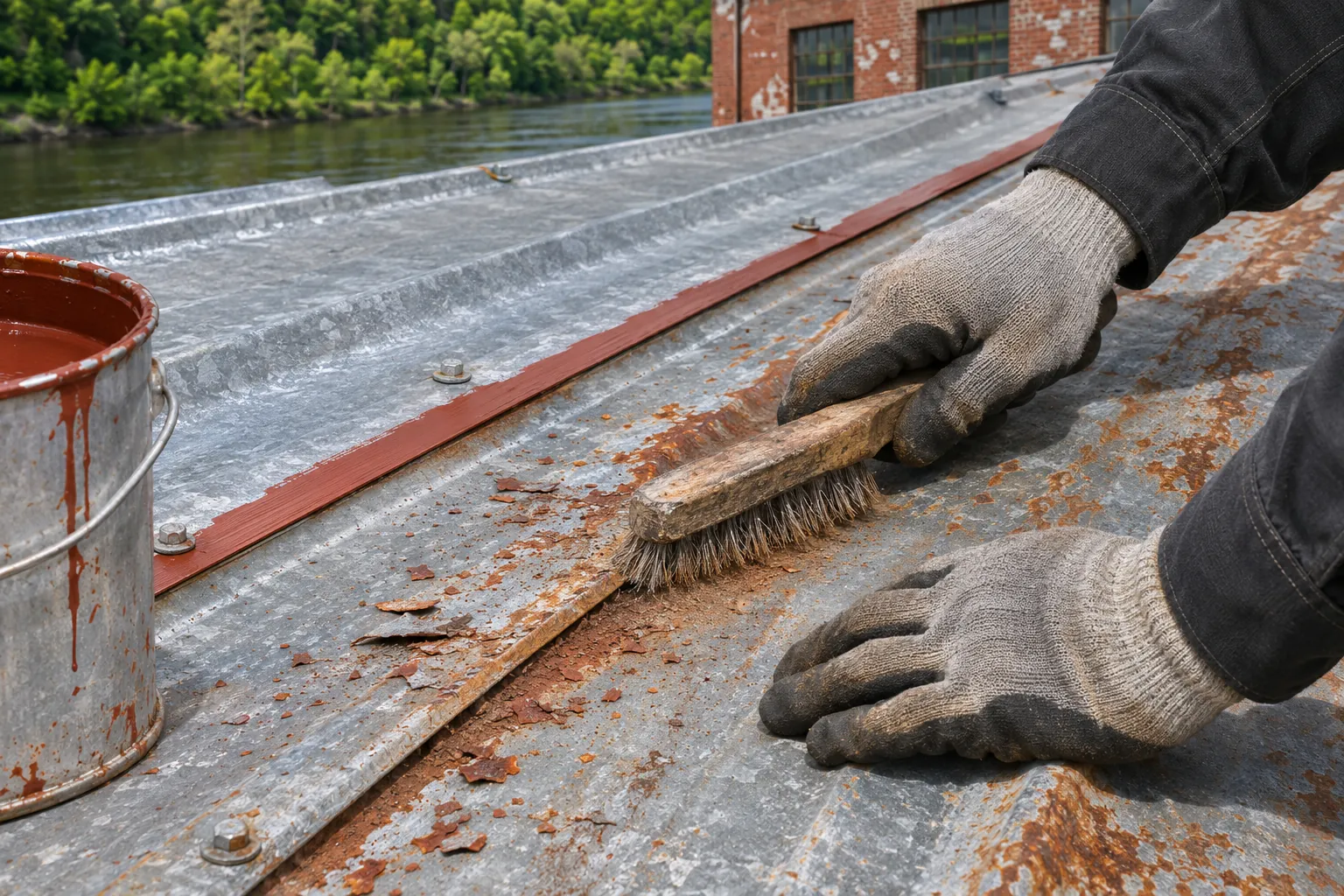
Gloved hands wire-brushing rust from a metal roof panel seam beside a can of red primer

Commercial Metal Roof Coating

Exposed-fastener and standing-seam panels on shops, terminals, and warehouses are restored with rust treatment, new fasteners, sealed laps, and a two-coat finish over the whole field.

Best For
  • Rusted panels with solid steel
  • Leaking screw rows and laps
Check First
  • Holes rusted through
  • Loose purlin attachment
Commercial Metal Roof Coating details →
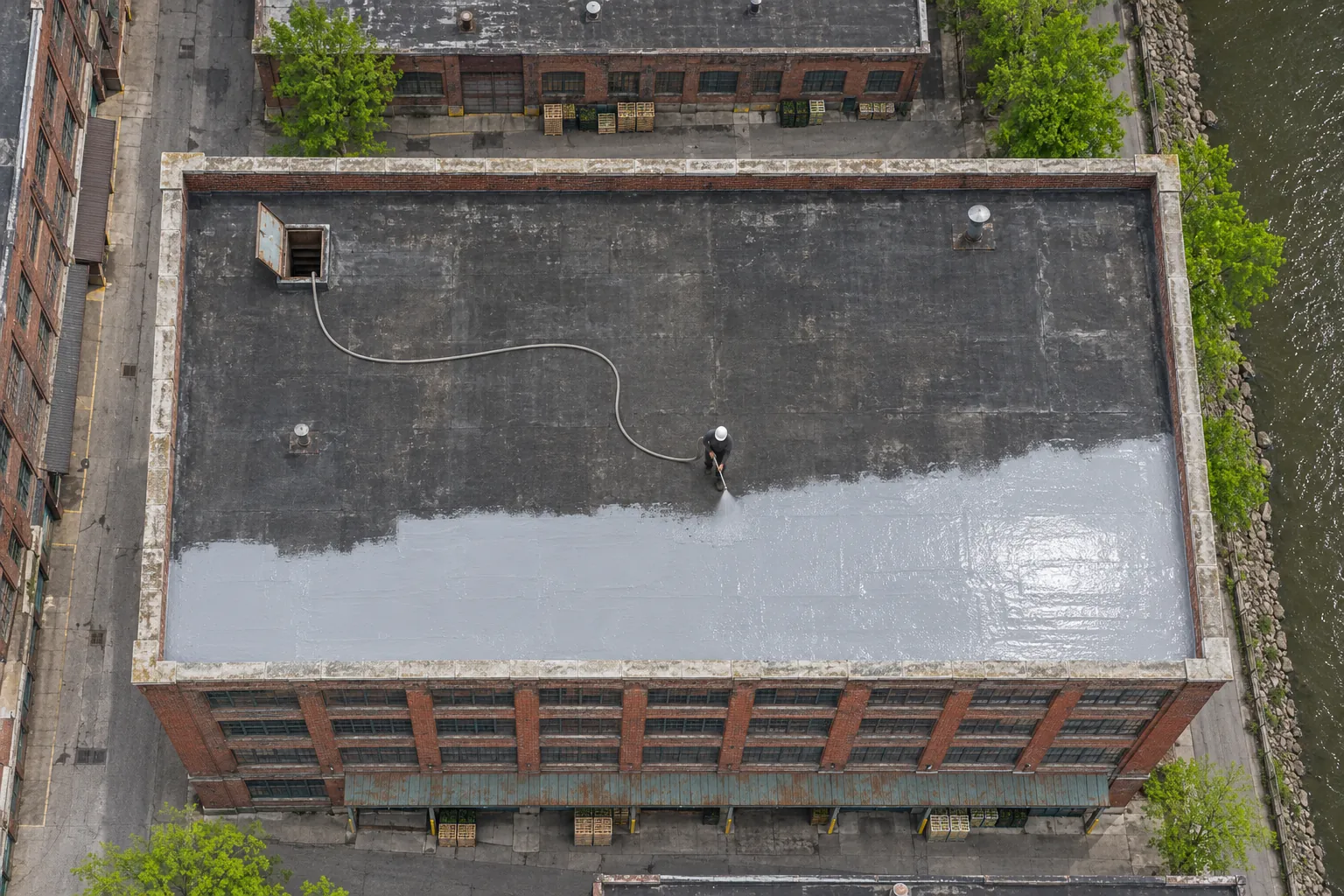
Top-down view of a flat roof on a brick mill building with gray silicone spread across half the field

Silicone Roof Coating

Moisture-tolerant coating for low-slope metal and flat roofs where some water lingers after rain, applied once the drains and low spots have been sorted out.

Best For
  • Low-slope metal roofs
  • Flat roofs over mills and plants
Check First
  • Why water collects
  • Old coatings it has to bond to
Silicone Roof Coating details →
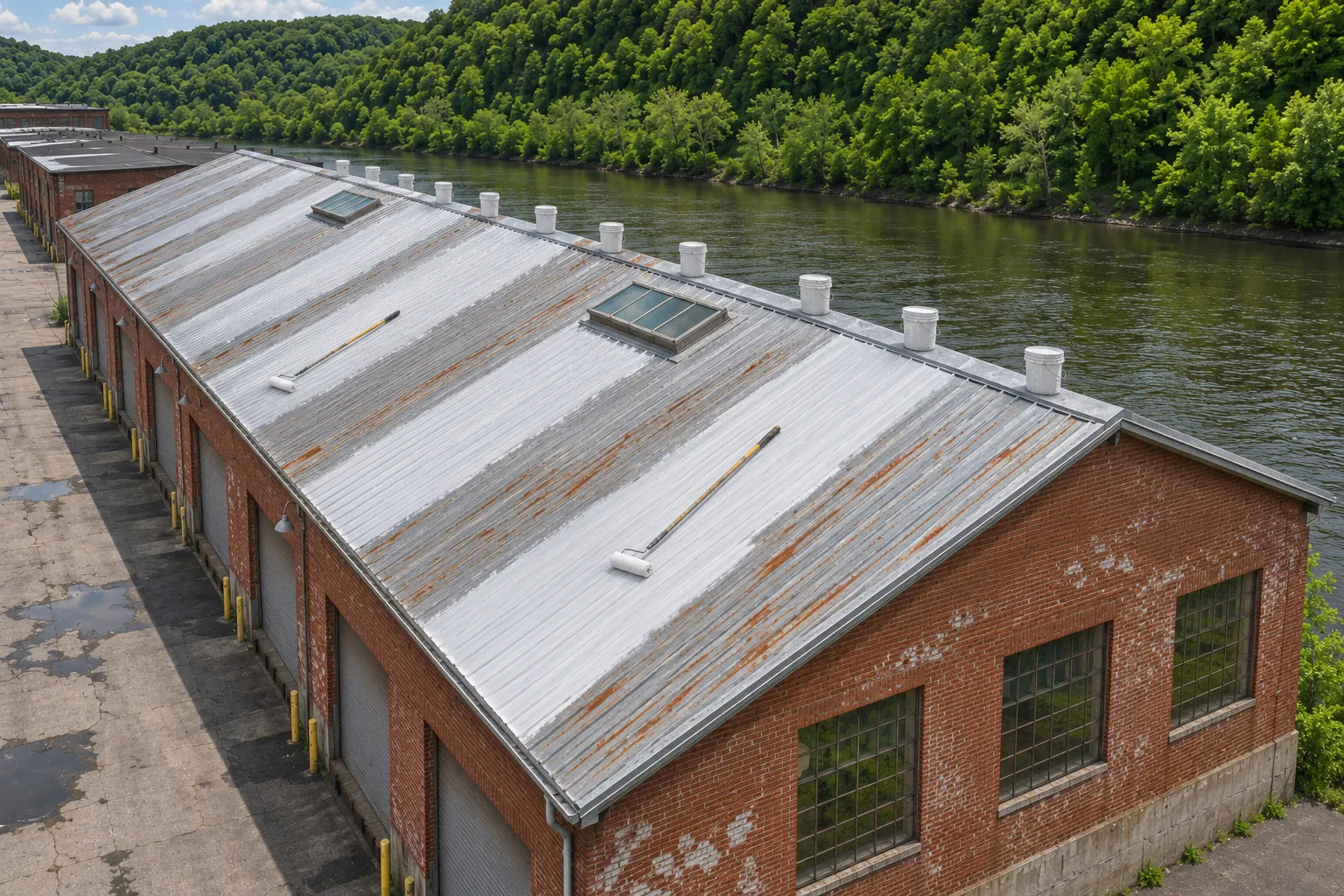
Low drone view along a ribbed metal warehouse roof with acrylic lanes rolled between rust streaks and vent stacks

Acrylic Roof Coating

Water-based coating for sloped metal that drains fast, rolled or sprayed in warm, dry weather and easy to recoat later with more acrylic.

Best For
  • Steeper metal panels
  • Roofs that shed water quickly
Check First
  • Surface temperature that day
  • Earlier patch materials
Acrylic Roof Coating details →
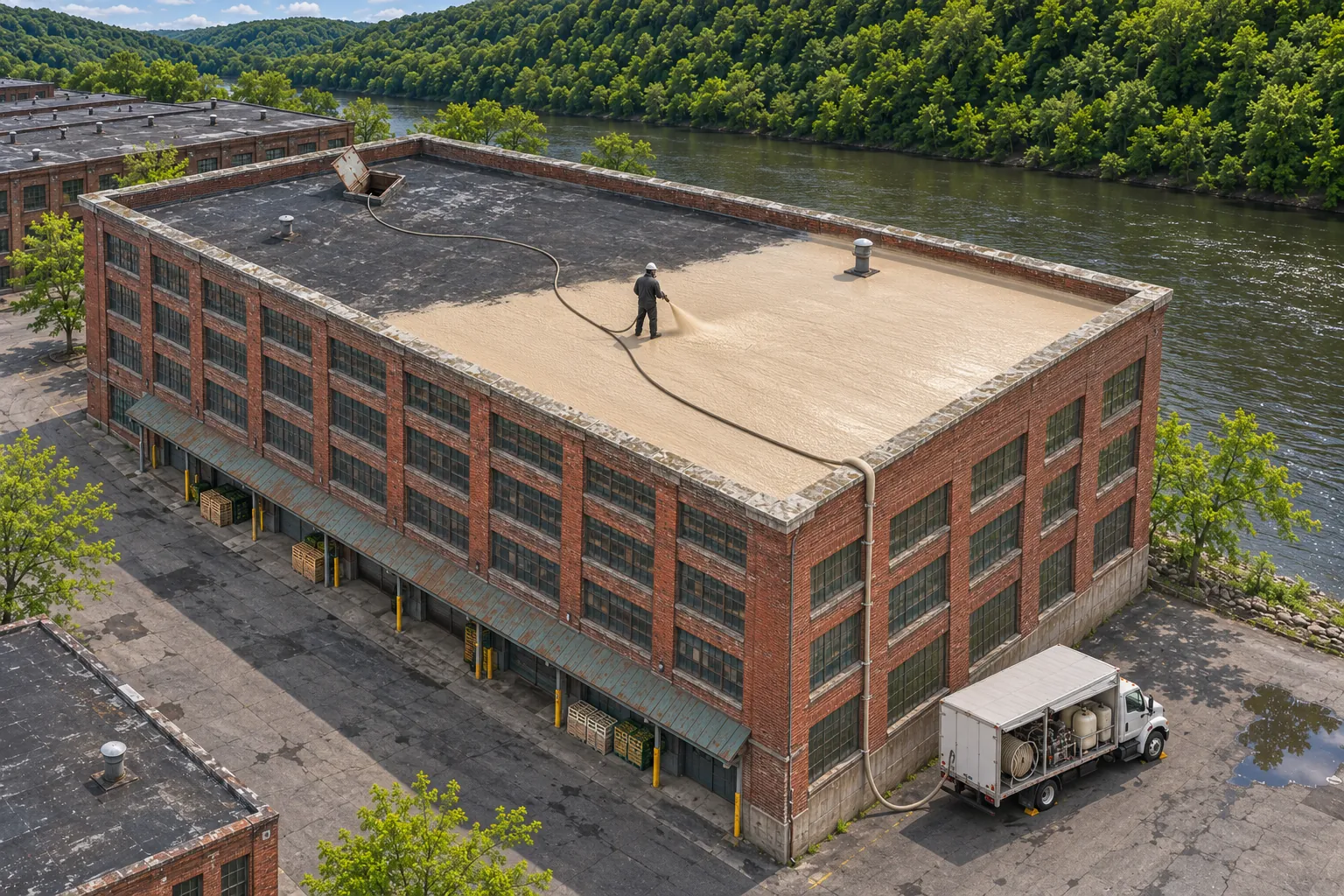
Roofer spraying foam across the flat roof of a four-story brick building with the spray rig parked below

Spray Foam Roofing

Sprayed polyurethane foam that adds insulation and forms one continuous surface over a flat roof, finished with a protective topcoat that gets renewed over time.

Best For
  • Flat roofs that need insulation
  • Roofs crowded with penetrations
Check First
  • Deck dryness
  • Overspray near intakes and cars
Spray Foam Roofing details →
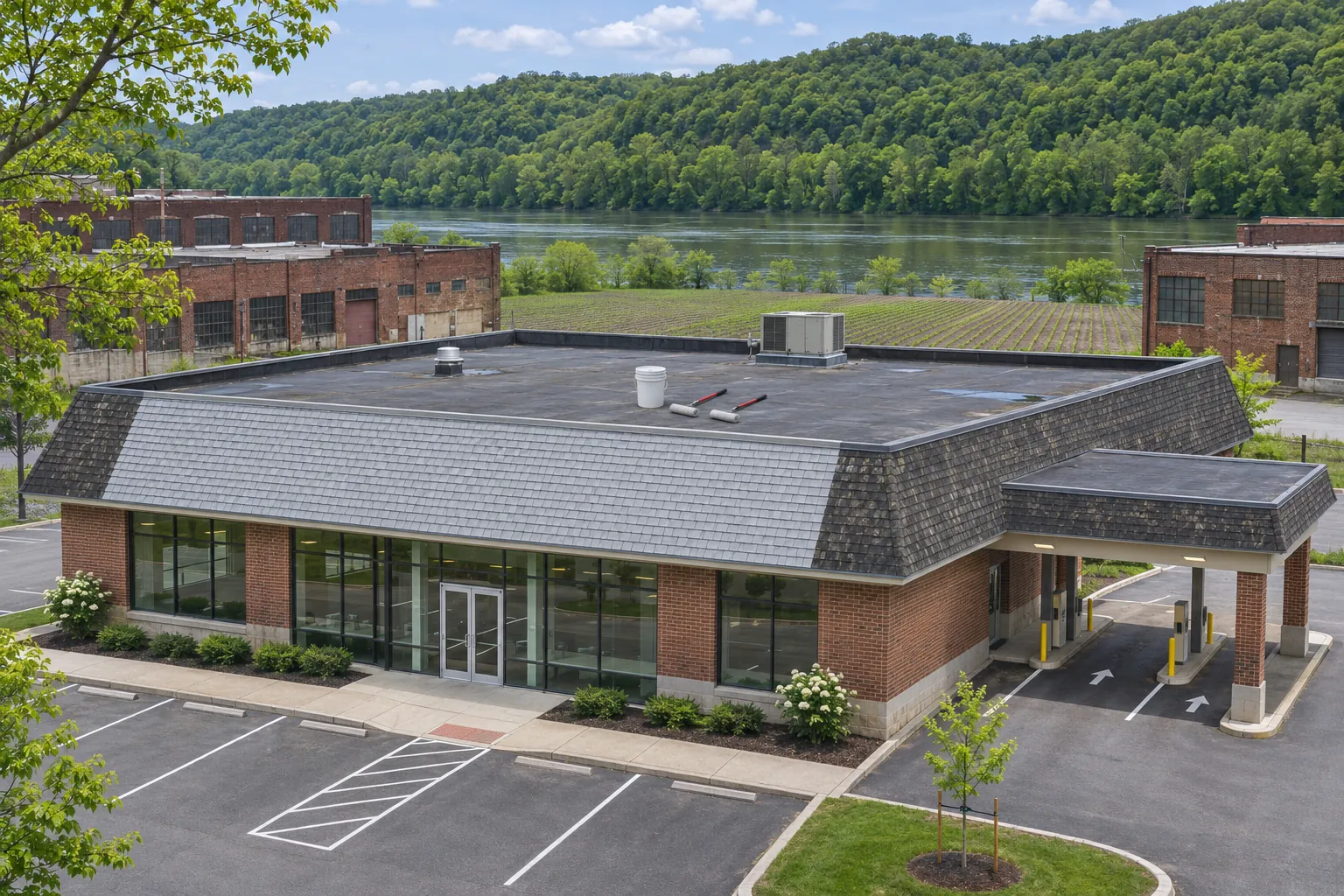
Drone view of a brick commercial building with a shingle mansard face around its flat roof

Shingle Roof Coating

Coating for serviceable asphalt shingle sections on commercial buildings, used only where the shingle maker and the coating maker both support the pairing.

Best For
  • Mansard faces and shingle sections
  • Flat-lying, attached shingles
Check First
  • Curled or brittle tabs
  • Flashing at walls and dormers
Shingle Roof Coating details →

Which System Fits Which Roof

The five systems side by side on the details that usually decide the choice.

SystemRoof SlopeWater On The RoofRecoat Path
Commercial Metal Roof CoatingLow slope to steep metal panelsSheds water; standing water is fixed firstSame coating family over a cleaned surface
Silicone Roof CoatingFlat and low-slope roofsTolerates some water lingering after rainRecoated with silicone only
Acrylic Roof CoatingSloped metal panelsNeeds quick drainage after every rainRecoated with acrylic after washing
Spray Foam RoofingFlat and low-slope roofsFoam can be built up to add slope to drainsProtective topcoat renewed on a schedule
Shingle Roof CoatingSteeper shingle sections and mansardsSheds water the way the shingles doFollows the coating maker's instructions

Not Sure Which System Fits?

Most roofs narrow to one or two systems after the first walk. Get a ballpark range now, and we confirm the system once we are on the roof.

From First Walk to Final Coat

This sequence applies to every system we install, from silicone to spray foam.

  1. 1

    Inspect Your Roof

    A roof walk covers every panel, drain, curb, and wall joint. A moisture meter and small core samples tell us whether the insulation under a flat section is dry enough to coat over.

  2. 2

    Pick The System

    Slope, ponding, existing coatings, and how the building is used decide between metal coating, silicone, acrylic, spray foam, or a shingle coating.

  3. 3

    Fix What Leaks Now

    Screws, laps, curbs, and wall flashing get repaired first. Wet insulation is cut out and replaced so moisture is never sealed under the new system.

  4. 4

    Prepare The Surface

    Washing, rust treatment, and primer get the roof ready for the chosen product. Foam jobs also mask intakes, windows, and parked vehicles close to the building.

  5. 5

    Apply And Measure

    Coats go on in the right weather at the right thickness, checked with a gauge as each section is finished and walked again before we leave.

Questions About Choosing a Coating System

Which Metal Roof Coating Service Fits My Building?

Slope and drainage decide

Slope and drainage decide most of it. Sloped metal panels that drain fast suit metal coating or acrylic; low-slope roofs that hold some water lean toward silicone; flat roofs that need insulation point to foam. The first roof walk confirms the choice, along with whatever coating is already on the roof.

Can Two Systems Be Used on One Building?

Yes, by roof section

Many Pittsburgh buildings pair a sloped metal warehouse with a flat office roof. Each section gets the system that fits it, and the joint where they meet is detailed so water crossing from one to the other runs over a sealed transition.

Does the Old Coating Have to Come Off?

Only where it is failing

Old coating that is well bonded can stay, once we test adhesion and confirm the new product is compatible with it. Peeling, blistered, or chalky layers come off down to a firm surface first, because a new coat holds only as well as the layer under it.

Can Coating Work Happen While We Operate?

Yes, in sections

Coating usually moves section by section, so loading docks, offices, and production areas keep running. Spray work near intakes is scheduled with your maintenance staff, and access, staging, and any short shutdowns are planned before the first day on the roof.

What Drives the Cost of One System Over Another?

Prep, thickness, details

Preparation usually moves the price more than the product. Rust treatment, fastener work, seam fabric, and rebuilt flashing add labor, and foam adds material with every inch of thickness. Coating type, film thickness, the number of coats, and roof access set the rest of the price.

How Do Pittsburgh Winters Affect the Choice?

They shape the schedule

Cold mostly changes when the work happens. Acrylic needs warm, dry stretches to cure, silicone and foam have their own temperature limits, and shaded sections stay cold longer than sunny ones. Freeze-thaw cycles also make seam and fastener repairs more important, whichever system goes on top.

Do All Five Systems Need the Same Repairs First?

Mostly the same list

Most of the list is shared: loose fasteners, open laps, failed flashing, and wet insulation are fixed whatever goes on top. Foam adds deck dryness checks and masking, silicone adds drainage fixes for standing water, and shingle coating adds a check with both makers before anything goes on.

Who Keeps the Product Information After Coating?

You do

You do. We leave the product names, colors, and thickness readings for each section, so later repairs use compatible materials instead of whatever a visiting crew happens to carry. Keep them with the building records for the roof.

Talk to Us About Metal Roof Coating Services in Pittsburgh

Send your roof size for a ballpark range, or call and we will set up a roof walk to pick the right system.

Call Us(878) 277-7555