Acrylic Coating

Pittsburgh Acrylic Roof Coating Contractor

Water-Based Coating That Protects Sloped Metal Panels

Pittsburgh acrylic roof coating follows two steps: we walk the panels for loose laps and rust, then prime them before rolling the acrylic.

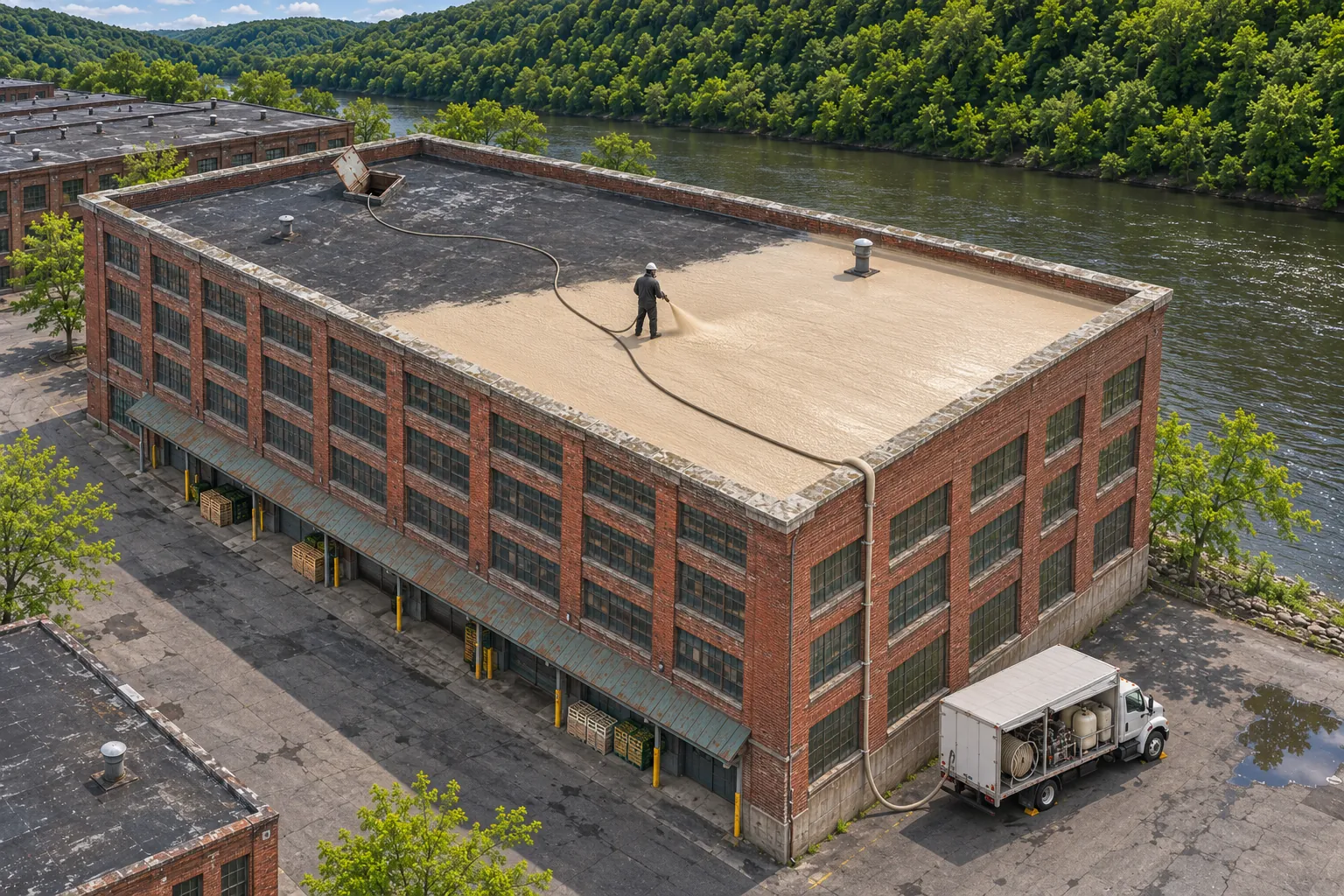
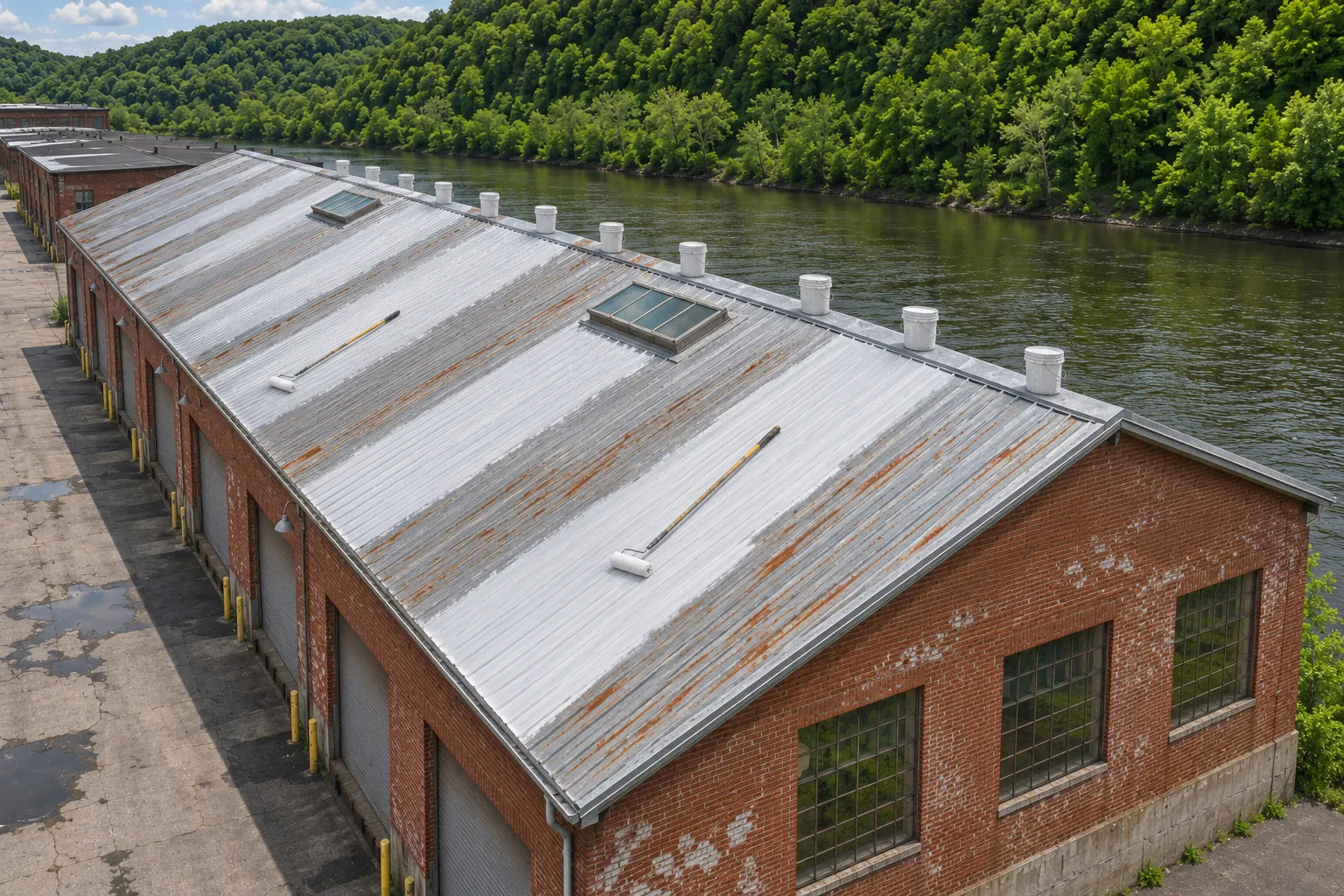
Wide drone view of a riverside brick warehouse with a half-coated metal roof between wooded hills and fields
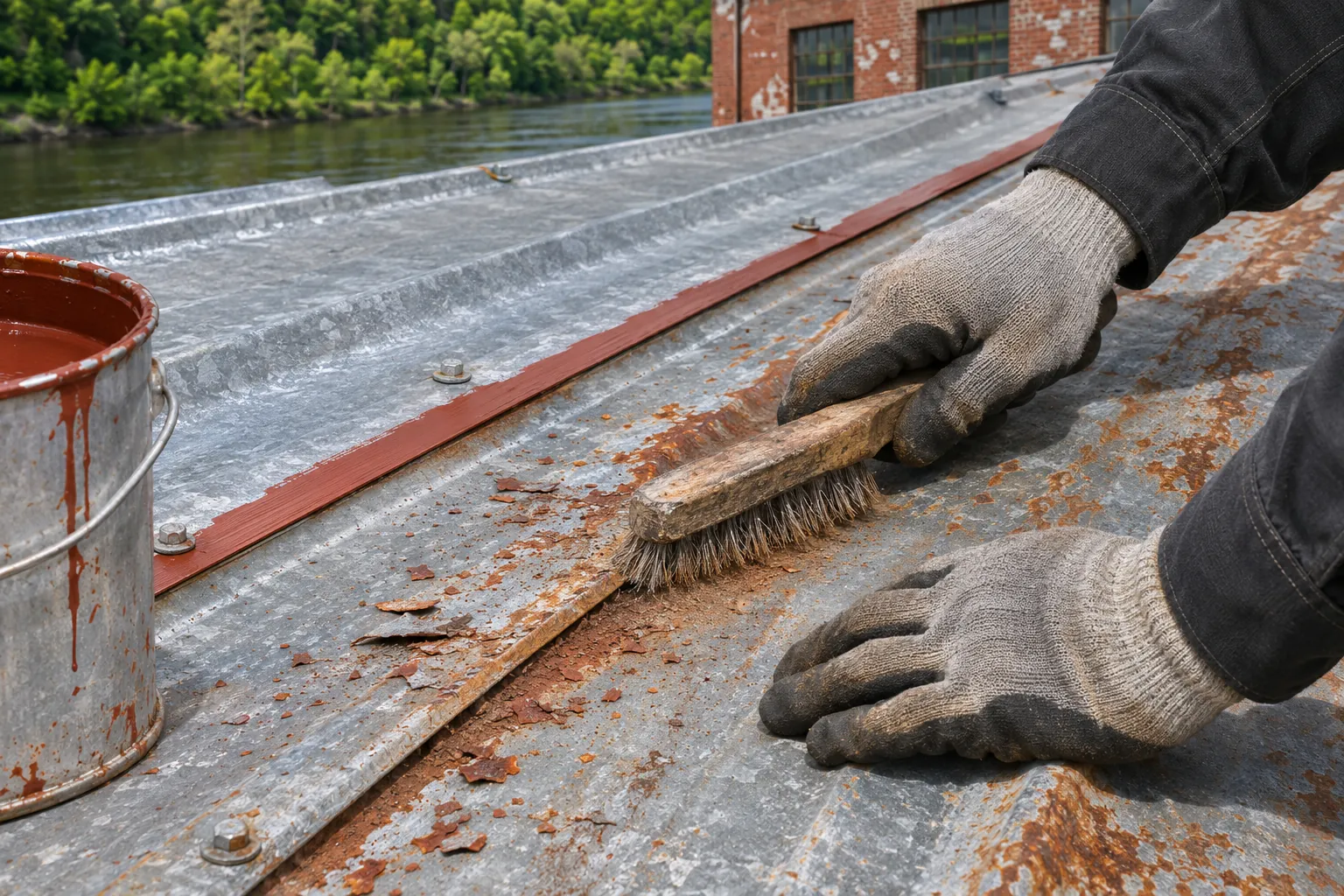
1Walk The Panels
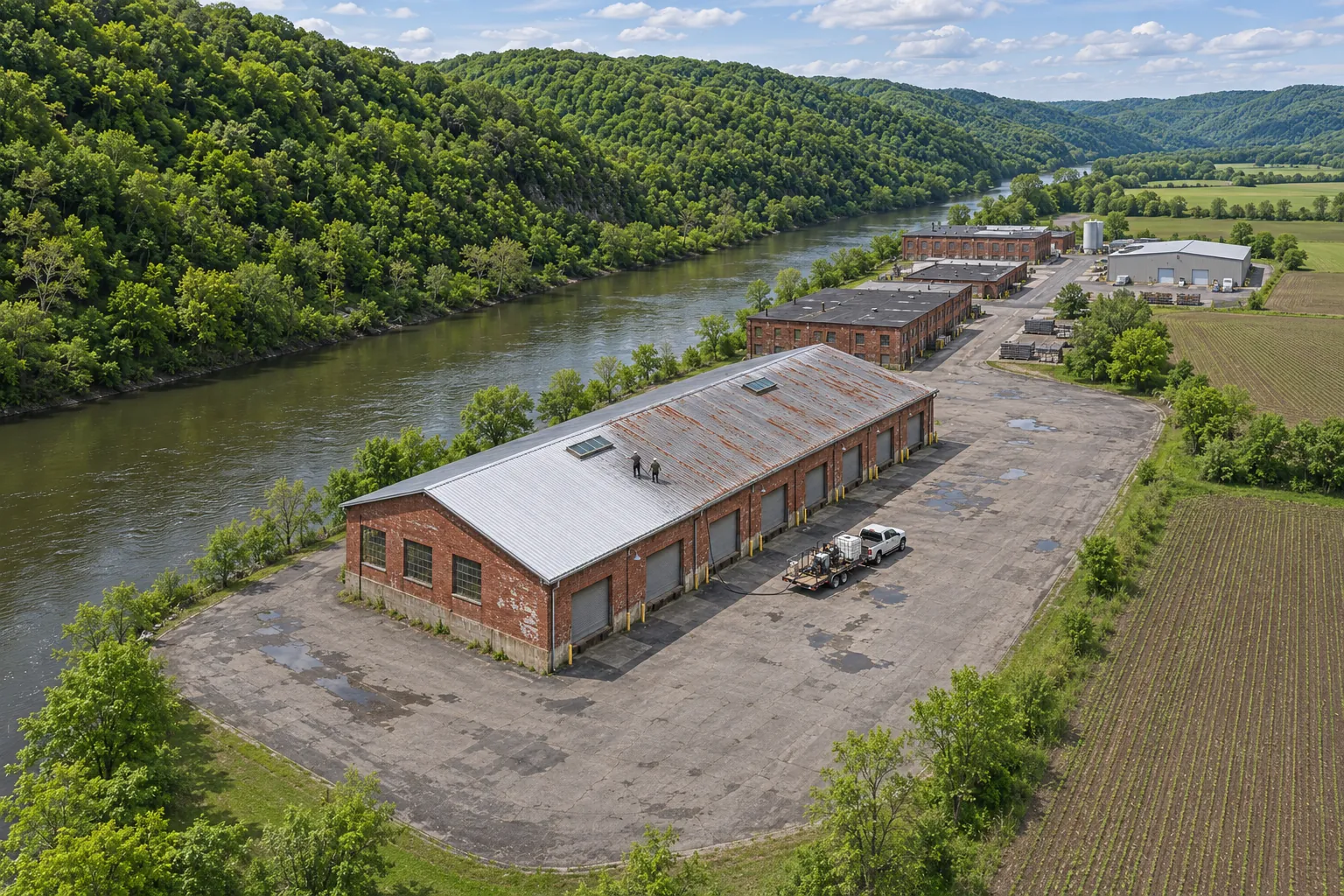
Low drone view along a ribbed metal warehouse roof with acrylic lanes rolled between rust streaks and vent stacks
2Roll The Acrylic
  • Cure window checked daily
  • Rolled or sprayed in passes
  • Fabric set at laps and boots
  • Recoats with acrylic later

Where Acrylic Roof Coating Works in Pittsburgh

Pittsburgh acrylic roof coating fits sloped metal that drains fast and can be scheduled for warm, dry days. Here is where it works and where it needs help first.

Good Fit

  • Sloped metal panels that shed water quickly
  • Roofs due for recoating every so often
  • Buildings that want a bright white finish
  • Earlier acrylic coats still bonded well
  • Projects that can wait for a dry week

Check First

  • Low spots that hold water overnight
  • Old asphalt or tar patches
  • Repairs made with unknown products
  • Panels too cold for the coating to cure
  • Roofs that need work in late fall

Conditions That Shape Pittsburgh Acrylic Roof Coating

Acrylic is water-based, so weather and old repairs matter more here than with other coatings.

Cold

Acrylic Coating Temperature Limits in Spring and Fall

You See
Frost on the panels at sunrise, dew at dusk.
What It Means
Low surface temperature and moisture can stop the cure. Spring and fall jobs go ahead only when the forecast allows the full drying period.
Rain

Acrylic Roof Coating Cure Time

You See
Rain in the forecast within a day of coating.
What It Means
Cure time varies from roof to roof. Shaded sections and thicker detail work need longer before rain or dew reaches them.
Old Repairs

Patches Made With Several Products

You See
A patchwork of sealants, tapes, and mastics.
What It Means
Each patch is tested for adhesion. Incompatible or loose patches come off and are rebuilt before the acrylic goes on.
Sun

Split Pipe Boots

You See
Cracked rubber boots around vent pipes.
What It Means
Boots are replaced or wrapped with fabric and acrylic, since a boot is where many sloped metal roofs leak first.

Commercial Roof Coating Options for Pittsburgh

Acrylic systems differ mainly in primer and build. These four cover most sloped metal roofs we see.

OptionWhere It FitsWhat To Know
Acrylic over rust primerRusted exposed-fastener panelsPrimer cures before the first coat
Acrylic over an old acrylic coatEarlier acrylic roofs worn thinWashed and spot-primed, then recoated
Fabric-reinforced acrylic detailsLaps, boots, and curb cornersFabric set in wet coating
Two-coat acrylic fieldMost sloped metal roofsSecond coat in a contrasting shade to check coverage

Benefits of Coating Your Roof

What wears out on sloped metal roofs, and what acrylic work does about it.

  • What Fails

    Thin, Faded Finish

    Sun and rain wear factory paint down to a chalky film.

    What The Coating Work Does

    Two coats of acrylic rebuild a bright, even surface over the whole field.

  • What Fails

    Dried Lap Sealant

    Sealant at end laps shrinks and cracks after many winters.

    What The Coating Work Does

    Laps get new sealant and fabric that the acrylic bonds to and stretches with.

  • What Fails

    Hot Panels

    Darker panels heat the space below on summer afternoons.

    What The Coating Work Does

    A white acrylic finish reflects much of the sun off the roof.

  • What Fails

    Rust at Fasteners

    Water sits under worn washers and starts rust around each screw.

    What The Coating Work Does

    Screws are resealed and primed, then sealed under the acrylic coats.

Planning a Spring or Fall Coating?

Acrylic needs dry, mild weather to cure. Get a ballpark range now so the job can be set for the right weather window.

How Acrylic Roof Coating Goes On in Pittsburgh

Five steps, timed around the weather, on every acrylic roof.

  1. 1

    Inspect Your Roof

    We look over every lap, boot, and fastener row, and test any earlier patches to see whether acrylic will bond to them.

  2. 2

    Pick The Weather Window

    The job is set for a stretch of dry days with surface temperatures inside the product limits, with time left for the coating to cure.

  3. 3

    Wash And Prime

    A pressure wash removes chalk and dirt, and primer goes on wherever bare or rusted steel shows.

  4. 4

    Set Fabric At Details

    Laps, boots, and curb corners get polyester fabric bedded in wet acrylic so these joints can move.

  5. 5

    Roll Two Coats

    Two field coats go on in passes, the second in a contrasting shade so missed spots stand out.

Other Systems We Coat in Pittsburgh

A sloped acrylic roof often sits next to a flat section that needs another system.

Acrylic Roof Coating Questions for Pittsburgh Owners

Does Acrylic Roof Coating Work Over Earlier Repairs?

Yes, if the patches hold

Acrylic can go over earlier repairs that are compatible and firmly attached, which we confirm before coating. We find the loose or incompatible patches and look at the metal beneath them. Some old repair work has to come off and be rebuilt, since fresh acrylic cannot turn a weak patch into a good base.

What Spring or Fall Weather Stops Acrylic From Curing?

Cold, damp, rain

Low roof surface temperatures, dew, and rain in the forecast can all interrupt the drying period acrylic needs. We plan Pittsburgh jobs by the product limits, including the hours after it goes on. Shaded areas and thick detail work dry more slowly, so a short dry spell is sometimes too short.

What Does Acrylic Roof Coating Cost?

About $2.50 to $4.00 per sq ft

Coating with acrylic lands inside about $2.50 to $4.00 per square foot of roof, against about $5 to $8 for replacing the roof. Work around vents, boots, and curbs is part of that scope. Roof size, access, rust and lap prep, fastener sealing, coating type and thickness, and coat count set where your roof falls.

Can Acrylic Go on a Roof That Holds Water?

Fix the low spot first

Standing water softens acrylic over time, so low spots are corrected first or that area gets a different product. On sloped metal this rarely comes up, though gutters and valleys that back up still get repaired.

How Often Does an Acrylic Roof Need Recoating?

When it wears thin

Recoat timing follows wear, so we look for thin, chalky areas and exposed laps during upkeep visits. Washing and a fresh acrylic coat over the worn areas is a simpler job than the first coating, since the base is already in place.

Is Acrylic or Silicone Better for a Sloped Metal Roof?

Often acrylic

On sloped metal that drains quickly, acrylic is often the better fit: it handles sun well, costs less to recoat, and accepts acrylic again later. Silicone earns its place on low-slope sections that hold water. Many Pittsburgh buildings end up with acrylic on the slopes and silicone on the flat additions.

Hire a Pittsburgh Acrylic Roof Coating Contractor

Get a ballpark range for acrylic coating, or call to plan the job around the next dry stretch.

Call Us(878) 277-7555