
Equipment
Supports Sitting on Bare Panels
- You See
- Rust rings around cable and conduit supports.
- What It Means
- Supports trap water and rub through the finish. Each one is lifted or flashed so coating can reach under and around it.
West Mifflin metal roof coating on warehouses starts by mapping cable runs and supports, then coating the field once every support is flashed.
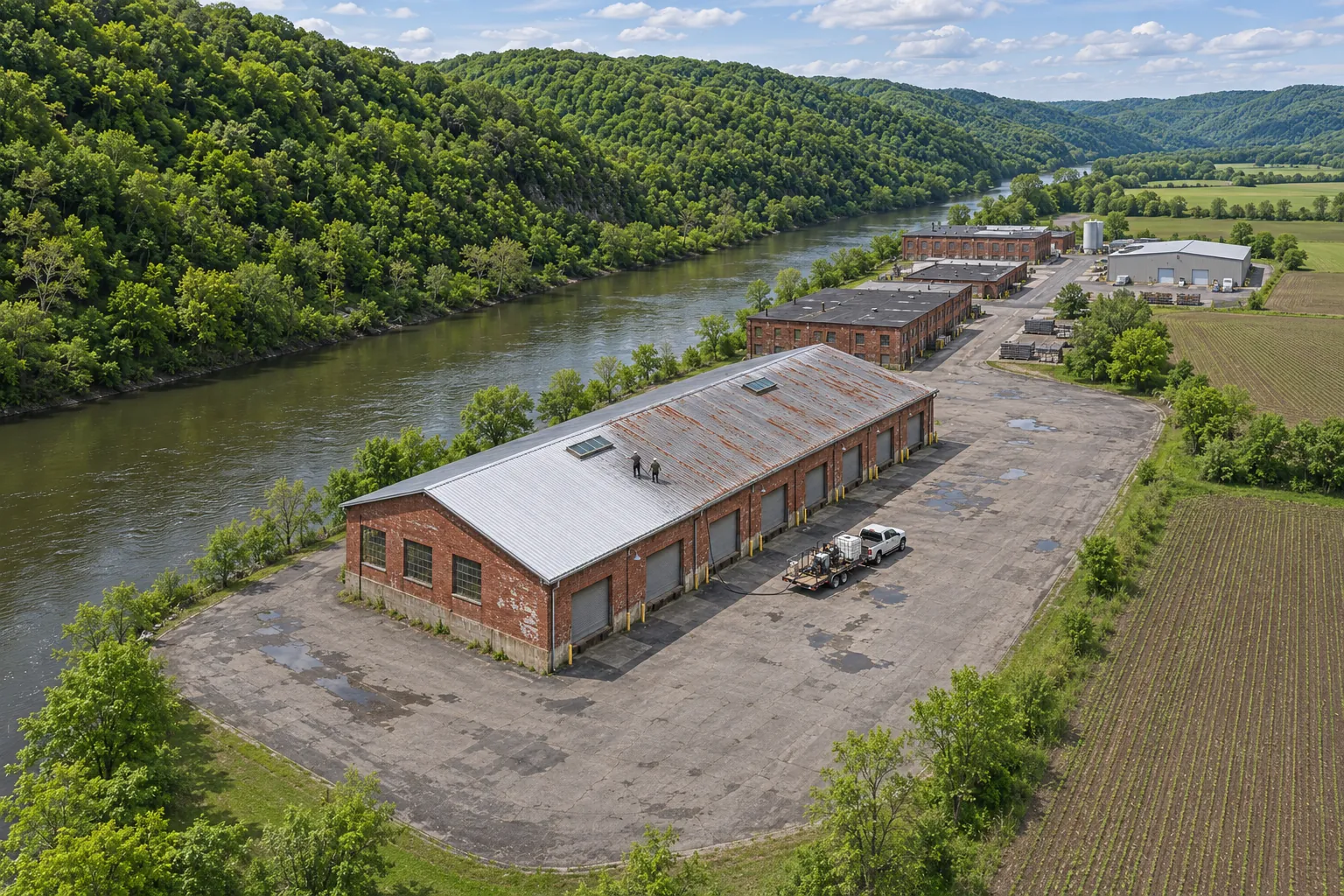
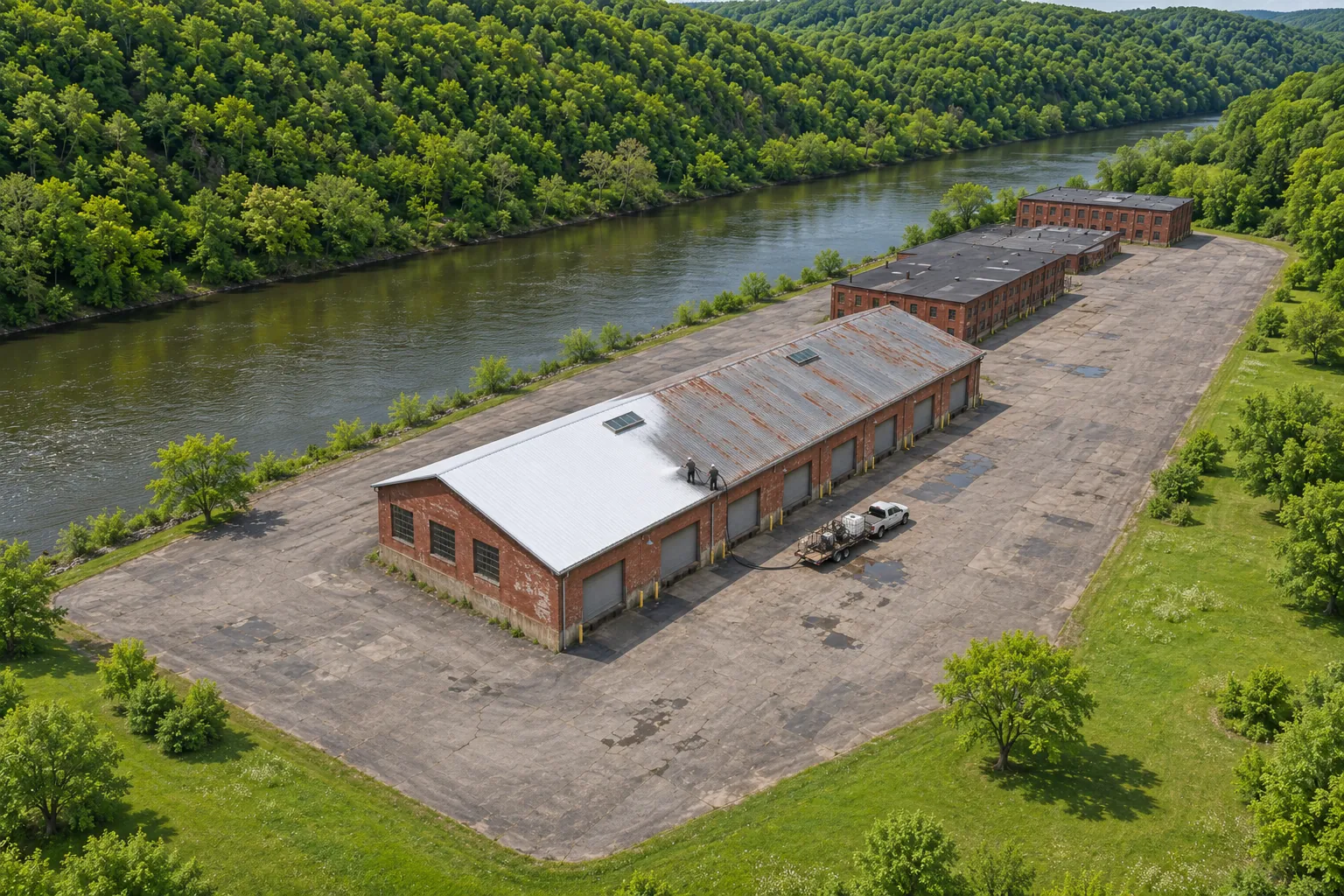
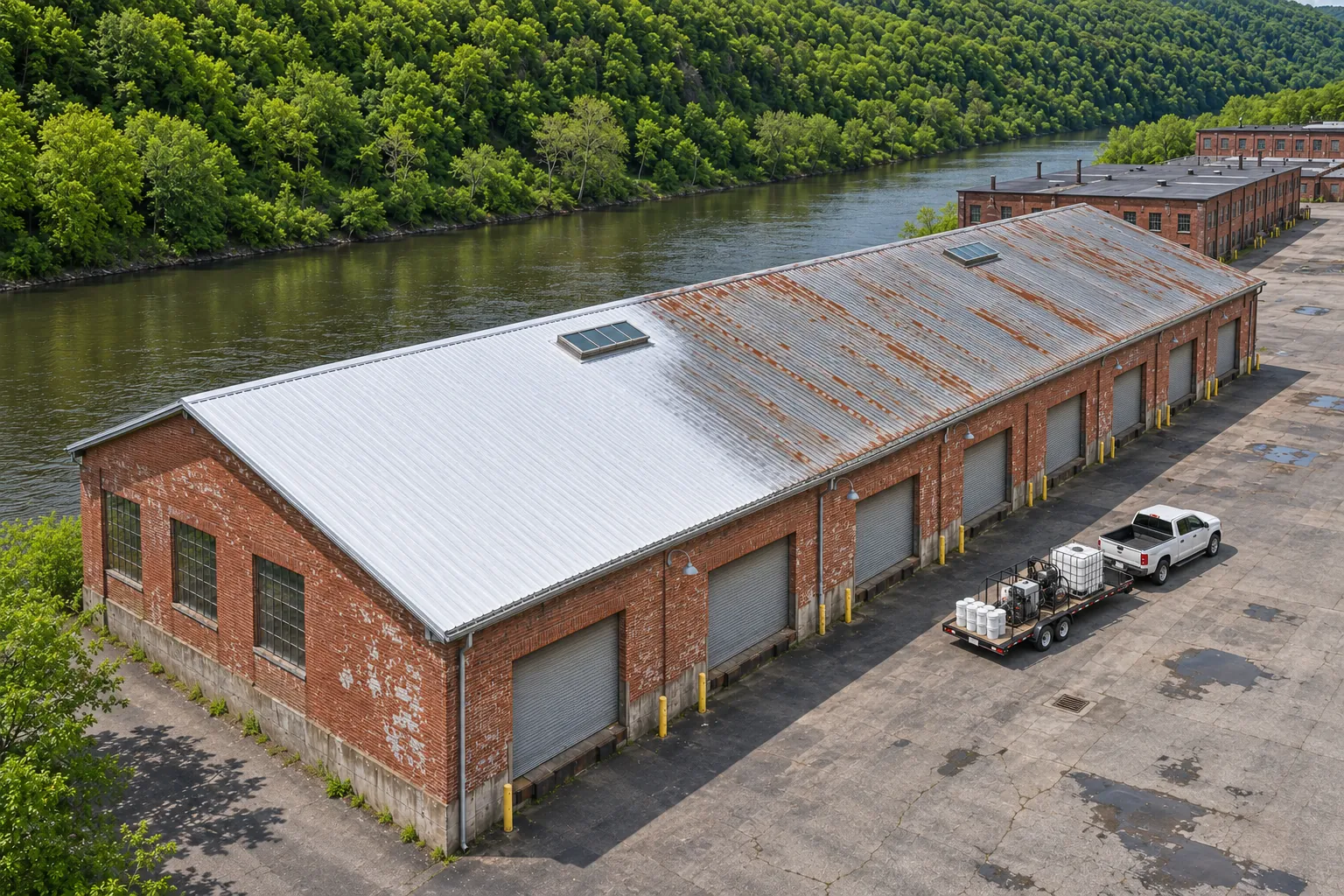
West Mifflin metal roof coating on warehouses means working around cables, trays, and the supports that hold them. We need room to prepare the whole flashing detail at each support and penetration, beyond the exposed panel field.
Any cable movement or support work is planned with the people responsible for it, so the finished roof stays undisturbed afterward. Drains and gutters on these long roofs get cleared and repaired in the same visit.
Warehouse and distribution roofs here share a few problems tied to their size and equipment.
Common failures on West Mifflin warehouse roofs, and what the coating work does about each.
Water collects where supports and pads sit on the panels.
Supports get flashed and sealed, and the coating runs continuously around them.
Long panels push and pull at end laps every day.
Laps are fastened, sealed, and bridged with fabric that moves with them.
Dark roofs heat large storage spaces in summer.
A white topcoat reflects more sun and keeps the roof surface cooler.
Gutters on large roofs carry more water and rust faster.
Gutter edges are treated and primed, and gutters are repaired or replaced as needed.
Most West Mifflin warehouse roofs take one of these approaches.
| Option | Where It Fits | What To Know |
|---|---|---|
| Acrylic over primed metal | Sloped warehouse roofs | Planned for dry weeks |
| Silicone on low-slope bays | Flat docks and additions | Handles slow drainage |
| Coating in phases | Very large roofs | One section at a time around operations |
| Support and drain repairs first | Roofs leaking at supports | Fixes the leak points before coating |
| Raised supports on new pads | Cable runs sitting on bare panels | Lets the coating run continuously underneath |
Supports sitting on bare metal rust the panel beneath them. Get a ballpark range for flashing the supports and coating the roof.
How a large warehouse roof with cables, trays, and supports gets coated, from the first walk to the final section.
We map every cable run, support, drain, and penetration, and check panels and laps across the whole roof.
Any move or lift of rooftop cables and supports is planned with the people responsible for them before prep starts.
Supports and penetrations get complete flashing details so water has no way under them.
Panels are washed and primed section by section so dock and storage areas keep working.
The field coat goes on once every support is sealed, finished in phases across the roof.
West Mifflin borders several of the towns where we coat warehouse and commercial roofs, listed below. For buildings elsewhere, call us or send us a message.
River terminals, fabrication shops, and hillside blocks with metal roofs.
Storefront and office roofs beside busy sidewalks.
Church, school, and office roofs checked from below.
Fabrication shops with old vent bases to rebuild.
Commercial roofs with worn rooftop service paths.
Coordinate cable access and protection before coating reaches the supports and penetrations. We need room to prepare the full flashing detail there, beyond the open panel field. Any cable movement or support work is planned with the responsible personnel so the finished roof is left alone afterward.
Warehouse coating sits in a range of about $2.50 to $4.00 per square foot of roof, and replacement about $5 to $8. The number of supports and penetrations to flash, gutter work, and phasing around operations decide where a large roof lands in that range.
Warehouses, distribution buildings, and commercial properties in West Mifflin are part of our regular area. Each roof gets the full inspection, and the work is phased around docks and storage.
We are a metal roof coating contractor near West Mifflin, working on warehouse and commercial roofs across the town. Call with the address and roof size to arrange an inspection.
Conditions and possible distress get assessed before anyone goes up. The coating and a lack of visible panel damage say nothing about structural capacity, so a structural evaluation can be needed. Snow-covered openings and equipment can also make the usual access paths unsafe until the roof can be approached safely.
The roof is split into sections that match the bays below. Each section is prepped and coated while the docks under the others stay open, and noisy work over loading areas is timed for shift changes or slower days.
Most cables and trays stay connected. Supports are lifted a few inches at a time or moved along the run so flashing and coating can reach under them, with the cable owner present. Any disconnect is their call and scheduled by them.
Get a ballpark range for your warehouse roof, or call to plan around the cables and supports up there.